Phone: +86-137 5102 2384
Phone: +86-137 5102 2384
Sep. 15, 2026
Share:
Scaling a PCBA from prototype to mass production without quality loss comes down to one rule: keep the same process, the same line set, and the same test regime at every volume. Benewave Tech makes this possible because its turnkey line set—6 SMT, 3 DIP, 2 functional test, 2 assembly lines with 100% functional coverage—runs your 5-piece pilot and your 50,000-piece run on identical equipment, supported by a NO MOQ policy and a 2-year warranty.
The most common failure mode is treating prototype and production as different vendors. When the prototype shop uses hand placement and the production shop uses a different line, the board that "worked" in the lab behaves differently at volume. The fix is structural: one partner, one process, one test regime from day one.
Benewave's one-stop model is built for exactly this—fabrication, sourcing, assembly, programming, testing, and box build under one roof.
New Product Introduction sets the trajectory. A strong NPI at Benewave includes:
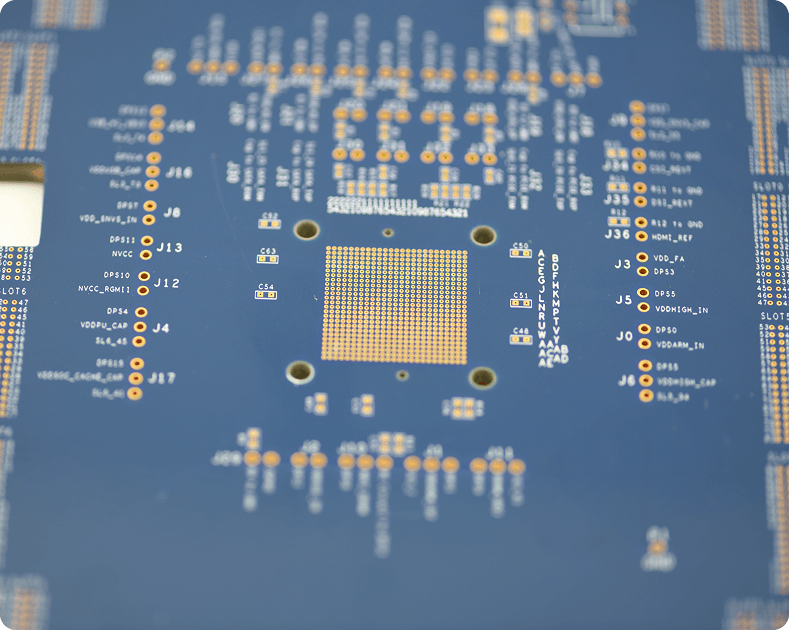
DFM review on Gerber/BOM before any board is cut.
Prototype SMT + DIP on the same lines used for production.
IC programming and first FCT to validate function.
Documentation of the test fixture and pass/fail criteria.
This stage answers: is the design buildable, testable, and stable? Get it right here and production is a repeat, not a reinvention.
Run a low-volume pilot (enabled by NO MOQ) to learn the real yield:
| Metric | What it tells you |
|---|---|
| First-pass AOI yield | Solder process health |
| ICT fail rate | Component-level defects |
| FCT pass rate | True functional readiness |
| Rework time per board | Design/process friction |
Pilot data becomes the baseline that mass production must match or beat. Without it, you scale an unknown.
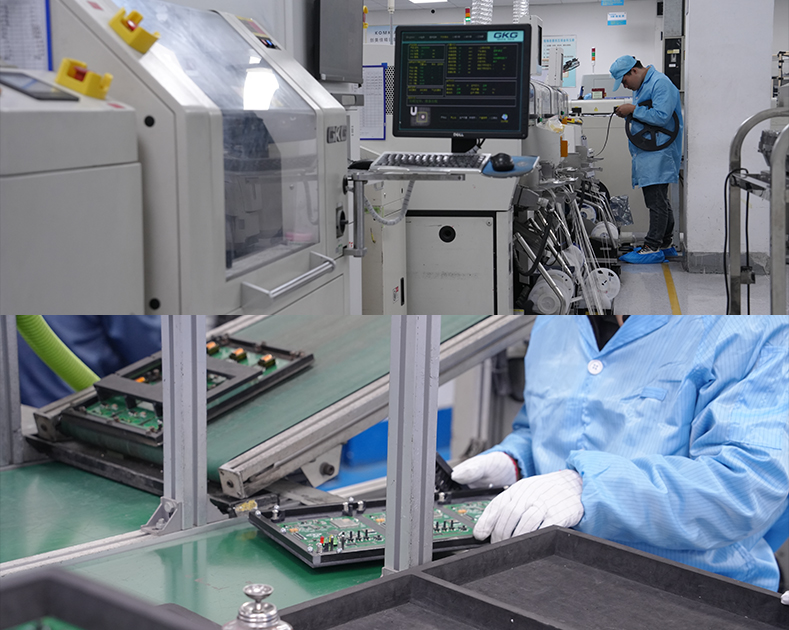
Scaling is then a capacity question, not a process question. With 6 SMT lines, 3 DIP lines, 2 functional test lines, and 2 assembly lines, Benewave absorbs volume without moving your board to unfamiliar equipment. Key controls during scale:
Lock the approved stencil, reflow profile, and feeder setup.
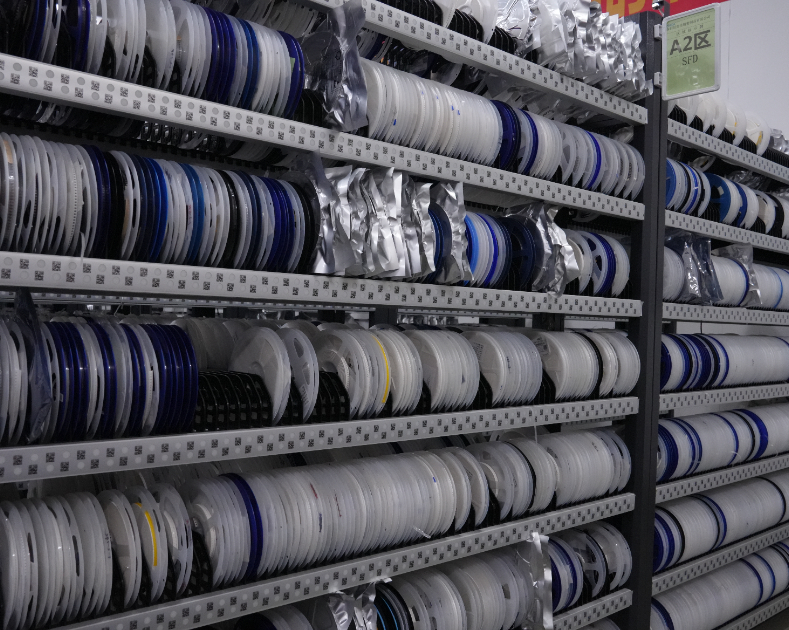
Keep the same component sources and lot-traceability.
Hold first-article approval at the start of each production batch.
Maintain 100% functional test coverage on every unit.
Quality at scale is defined by test, not by hope. Our regime:
AOI + X-Ray for solder integrity under BGAs/QFNs.
ICT for component-level opens/shorts.
FCT on custom fixtures validating full operation.
100% functional test coverage before shipment.
Because the same fixtures and criteria are used from pilot to volume, a pass at 50 units means the same pass at 50,000.
Process drift. A changed reflow profile raises voiding. Lock and monitor thermal profiles.
Source switch. Swapping a distributor mid-run breaks traceability. Freeze sources at NPI.
Test relaxation. "We'll sample-test at volume" invites field escapes. Keep 100% FCT.
No first-article. Starting a batch without approval repeats pilot mistakes at scale.
Fixture neglect. A drifting FCT fixture passes bad boards. Calibrate fixtures on schedule.
Quality is a habit, not an event. Beyond the build, maintain it through:
Batch records. Every run keeps its source, test, and programming logs.
RMA and failure analysis. A 2-year warranty with 1-on-1 service turns returns into improvements.
Replenishment. Re-order the same approved BOM and sources—no silent changes.
Continuous DFM. Feed field data back into design for the next revision.
This is the "maintenance experience" of a mature PCBA partnership: the relationship that keeps performing after the first shipment.
Scaling discipline matters most where failure is costly. On our solutions page we serve:
Medical Devices—where traceability and yield are regulatory, not optional.
Automotive Electronics—where volume and reliability must coexist.
Industrial Electronics—long field life, harsh environments.
Communication & IoT—fast scale from pilot to global rollout.
Quality that survives volume is documented quality. At NPI, lock and hand over:
The approved Gerber, BOM, and centroid files used for the pilot.
The stencil and reflow profile that produced a good first-pass yield.
The FCT fixture and test limits (pass/fail criteria).
The approved component sources and lot-traceability format.
Production then executes the same package. When a new revision arrives, re-run NPI on the changed sections only—not the whole board—saving time while keeping the proven parts untouched.
Re-qualification is expensive, so apply it only when something that affects build or function changes:
Re-qualify when the substrate, layer stack-up, footprint, or key IC changes.
Re-qualify when a source or finish changes.
Do NOT re-qualify for a cosmetic silkscreen tweak or a documentation typo fix.
This discipline keeps a stable product stable while still catching the changes that matter—exactly the balance a 2-year-warranty partner must hold.
Yes. With NO MOQ limitation, you can run a 5-piece pilot and scale to mass production on the same lines and process.
Yes. AOI, X-Ray, ICT, and 100% FCT travel from pilot to production with the same fixtures and criteria.
A minimum 2-year quality warranty with 1-on-1 service and RMA/failure analysis.
By locking the stencil, reflow profile, feeder setup, and component sources at NPI and holding first-article approval per batch.
Send Gerber + BOM to zoe@benewavetech.com or via our contact page.
Scale without the quality cliff. Email zoe@benewavetech.com or use our contact page. Benewave Tech runs your prototype and mass production on one turnkey process—6 SMT / 3 DIP / 2 test / 2 assembly lines, 100% functional test, and a 2-year warranty from pilot to volume.
Internal references: one-stop PCB assembly · capabilities · solutions · why Benewave · FAQ
Find Partners, Not Just Suppliers
Expert OEM & PCBA manufacturing tailored to your exact specifications. Contact us today to discuss your project and discover a more collaborative way to manufacture.
Get a Fast Quote & Free DFM Review
Related PCB Assembly Service