Phone: +86-137 5102 2384
Phone: +86-137 5102 2384
Sep. 04, 2026
Share:
What Information Do You Need to Get an Accurate PCB Assembly Quote? You need to provide complete and consistent data about the printed circuit board (PCB), components, assembly process, testing requirements, order quantity, and delivery plan. This information allows a contract electronics manufacturer such as Benewave to calculate material cost, setup charges, labor, inspection, tooling, logistics, and production lead time. A complete request for quotation (RFQ) improves price accuracy, prevents engineering changes, and helps your business move from prototype to reliable volume production faster.
For companies seeking one stop pcb assembly, the quotation is more than a price estimate. It is an early manufacturing review that identifies missing files, obsolete components, design-for-manufacturability (DFM) risks, and possible supply-chain delays.
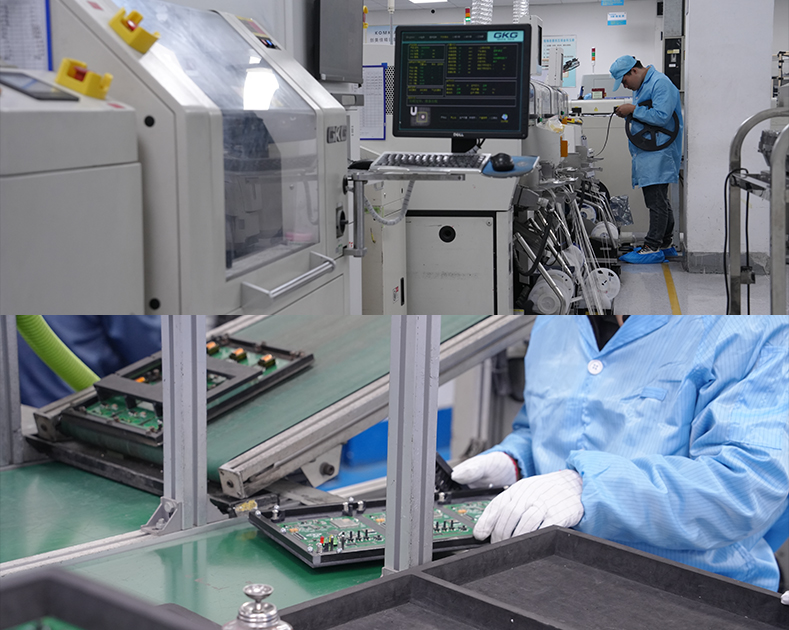
A PCB assembly quote combines several cost categories:
If a supplier receives only a Gerber file, the quote may exclude components, test fixtures, special finishes, or assembly labor. The initial price can look attractive but change substantially after engineering review.
A detailed RFQ helps Benewave or another electronics manufacturing services (EMS) provider identify the true manufacturing requirements before production begins. This supports better budgeting, more predictable margins, and fewer purchase-order revisions.
PCB assembly has developed significantly since the early era of manually wired electronic circuits. The introduction of printed circuit boards enabled repeatable electrical connections and higher product density. Later, surface-mount technology reduced component size and improved automated production speed.
Today, PCB manufacturing is closely connected to:
Modern assembly lines use high-speed pick-and-place machines, solder paste inspection (SPI), reflow profiling, AOI, selective soldering, and traceability software. As products become smaller and more complex, suppliers need much more than a board outline to prepare a reliable quotation.
The growth of global electronics manufacturing also created demand for one stop pcb assembly services. Instead of coordinating separate PCB fabrication, component sourcing, assembly, testing, and shipping suppliers, customers can work with one manufacturing partner.
The following information gives a supplier the technical and commercial data required for an accurate quote.
Provide the latest manufacturing data package, preferably in a standard format such as Gerber X2 or ODB++. The package should include:
The fabrication drawing should identify the board thickness, copper weight, tolerance, layer count, material type, and special requirements.
For example, a six-layer FR-4 board with 1.6 mm thickness, ENIG surface finish, 1 oz copper, and controlled impedance has a different cost structure from a two-layer HASL board. Even a small change in board thickness or finish can affect fabrication pricing and lead time.
The BOM is one of the most important documents in a PCB assembly RFQ. It should contain:
| BOM Information | Why It Matters |
|---|---|
| Manufacturer part number (MPN) | Confirms the exact component |
| Reference designator | Links the part to the PCB location |
| Quantity per board | Determines material requirements |
| Approved manufacturer list (AML) | Allows qualified substitutions |
| Component description | Helps identify errors |
| Package type | Determines placement and soldering method |
| Lifecycle status | Reveals obsolete or end-of-life parts |
| Preferred distributor | Supports sourcing decisions |
| RoHS or REACH status | Confirms compliance requirements |
Avoid using only generic descriptions such as “10 kΩ resistor” or “microcontroller.” Two parts with the same electrical value may have different package sizes, tolerances, temperature ratings, or availability.
A strong BOM also identifies no-load (DNI), do-not-populate (DNP), and customer-supplied components. This prevents unnecessary purchasing and assembly errors.
The centroid file, also called the pick-and-place file, tells the assembly machine where each surface-mount component is positioned. It normally includes:
Accurate centroid data helps the EMS provider program the SMT line efficiently. Incorrect rotation values or mirrored coordinates can cause placement defects, particularly for polarized capacitors, diodes, LEDs, connectors, and integrated circuits.
Assembly drawings clarify information that may not be obvious in the Gerber package. Include:
If the product requires selective soldering, wave soldering, press-fit insertion, or manual assembly, identify these processes in advance. They affect labor, tooling, and production scheduling.
A quote should specify whether you need:
Quantity affects component pricing, stencil amortization, machine setup, inspection cost, and purchasing strategy. For example, a supplier may source components differently for 10 prototype boards than for 10,000 production units.
Also provide:
This allows the supplier to recommend a practical manufacturing plan rather than quoting only the immediate order.
Testing requirements must be defined before quoting because they can require fixtures, programming, engineering time, and additional labor.
Common options include:
Your documentation should also state the acceptance criteria. Many commercial assemblies use IPC-A-610 for electronic assembly acceptability and IPC J-STD-001 for soldering requirements. Cable and wire assemblies may use IPC/WHMA-A-620.
For sampling and inspection plans, a supplier may also reference ISO 2859-1, which is aligned with statistical acceptance sampling. ASTM or DIN standards may apply to specific materials, environmental tests, or mechanical requirements, but they should not be selected arbitrarily. The applicable standard depends on the product and market.
If you require 100% visual inspection, a test report, or traceability for every serial number, state it clearly. A credible quotation should identify whether inspection is performed at 100% coverage or by statistical sampling.
Regulated or export-controlled products may need additional documentation, such as:
Do not assume that “RoHS compliant” covers every regulatory requirement. A medical, automotive, or aerospace application may require controlled processes, validation records, and documented change management.
Technical files alone are not enough. The supplier also needs commercial information to calculate the total landed cost.
For international orders, ask whether the quote includes customs clearance, duties, freight, and insurance. A low ex-works price may not be the lowest total cost after transportation and import charges.
For one stop pcb assembly, confirm whether the supplier includes PCB fabrication, component procurement, assembly, inspection, testing, final assembly, and delivery. The phrase “turnkey” can have different meanings between suppliers.
A missing connector, thermal pad, or mechanical fastener can create a significant cost difference. Check that every populated reference designator appears in the BOM.
A part may be technically correct but unavailable in the required quantity. Ask the supplier to check lifecycle status, authorized distribution, lead time, and approved alternatives.
If DNP or DNI parts are not clearly marked, the manufacturer may purchase and place them unnecessarily.
A 0402 resistor, 0603 resistor, and through-hole resistor may all have the same resistance but require different assembly processes and costs.
A quote that excludes ICT, FCT, programming, or burn-in is not directly comparable with a quote that includes those services.
If the BOM, PCB revision, or assembly drawing changes after the quote, request a revised quotation. Even a minor revision can affect component availability, stencil design, programming, and yield.
When evaluating Benewave, ask for a quotation that separates the main cost drivers. A transparent RFQ response should ideally show:
A professional supplier should also perform a DFM and design-for-assembly (DFA) review. Typical review items include solder-mask clearance, pad geometry, component spacing, fiducial placement, BGA escape routing, board warpage, thermal relief, and panelization.
Ask about quality controls such as AOI coverage, process traceability, reflow temperature profiling, ESD protection, and corrective-action procedures. If a supplier states “100% inspection,” clarify what is inspected, which equipment is used, and whether inspection records are available.
For measurable requirements, specify tolerances where relevant. For example, a mechanical feature may require dimensional control to 0.01 mm, while component placement tolerances depend on package type, machine capability, and the relevant IPC criteria. Avoid assuming that every part of an assembly can be held to the same precision.
Imagine a customer requests 100 controller boards and provides only a two-layer Gerber file. The initial quote excludes the BOM, firmware programming, and functional testing.
During engineering review, the supplier discovers that:
The revised quote is higher, but it is more realistic. It includes component procurement, a custom test fixture, BGA inspection, manual assembly, programming, and functional verification. This prevents unexpected charges after the purchase order and gives the customer a more reliable production schedule.
In contrast, a complete RFQ submitted with the BOM, centroid file, test specification, and delivery forecast allows Benewave to review sourcing and manufacturing risks earlier.
Before requesting a quote, prepare the following package:
A structured RFQ can support a 24-hour response for an initial review when the documentation is complete, although complex products may require additional engineering time. Always confirm the response time, quote validity, and assumptions with the supplier.
What Information Do You Need to Get an Accurate PCB Assembly Quote? You need complete manufacturing data, a controlled BOM, accurate placement files, assembly instructions, testing requirements, quantity forecasts, and commercial delivery details. These documents help a supplier calculate the real cost and identify risks before production.
The most common quoting problems come from incomplete BOMs, unclear DNP parts, missing test requirements, obsolete components, and undefined logistics. A reliable one stop pcb assembly partner should provide transparent pricing, DFM feedback, documented inspection, and clear assumptions.
If you are preparing an RFQ for Benewave, organize the full data package and request a line-item quotation. Asking the right technical and commercial questions at the beginning can improve cost control, shorten production delays, and create a stronger path from prototype assembly to dependable volume manufacturing.
Find Partners, Not Just Suppliers
Expert OEM & PCBA manufacturing tailored to your exact specifications. Contact us today to discuss your project and discover a more collaborative way to manufacture.
Get a Fast Quote & Free DFM Review
Related PCB Assembly Service