Phone: +86-137 5102 2384
Phone: +86-137 5102 2384
Jun. 26, 2026
Share:
Medical device PCBs operate at the intersection of electronics engineering and patient safety. A failed solder joint in a consumer wearable is an inconvenience; the same defect in an implantable cardioverter-defibrillator (ICD) or an infusion pump is potentially fatal. This reality shapes every decision in medical PCB assembly—from substrate selection and surface finish chemistry to traceability granularity and sterilization validation.
The global medical electronics market is projected to exceed $100 billion by 2027, driven by wearable diagnostics, minimally invasive surgical robotics, and AI-enabled imaging systems. Yet regulatory complexity is escalating in parallel. The FDA's 2026 guidance on cybersecurity for connected medical devices, the EU MDR's tightened post-market surveillance requirements, and China's NMPA accelerated review pathways all place new burdens on PCB assembly operations. Manufacturers that treat medical assembly as standard electronics with extra paperwork will fail audits, face recalls, and endanger patients. Those that build compliance into the manufacturing DNA gain a durable competitive advantage.
This article examines what makes medical PCB assembly distinct, the regulatory and technical requirements that define the field, and how OEMs should select and collaborate with assembly partners capable of meeting life-critical standards.
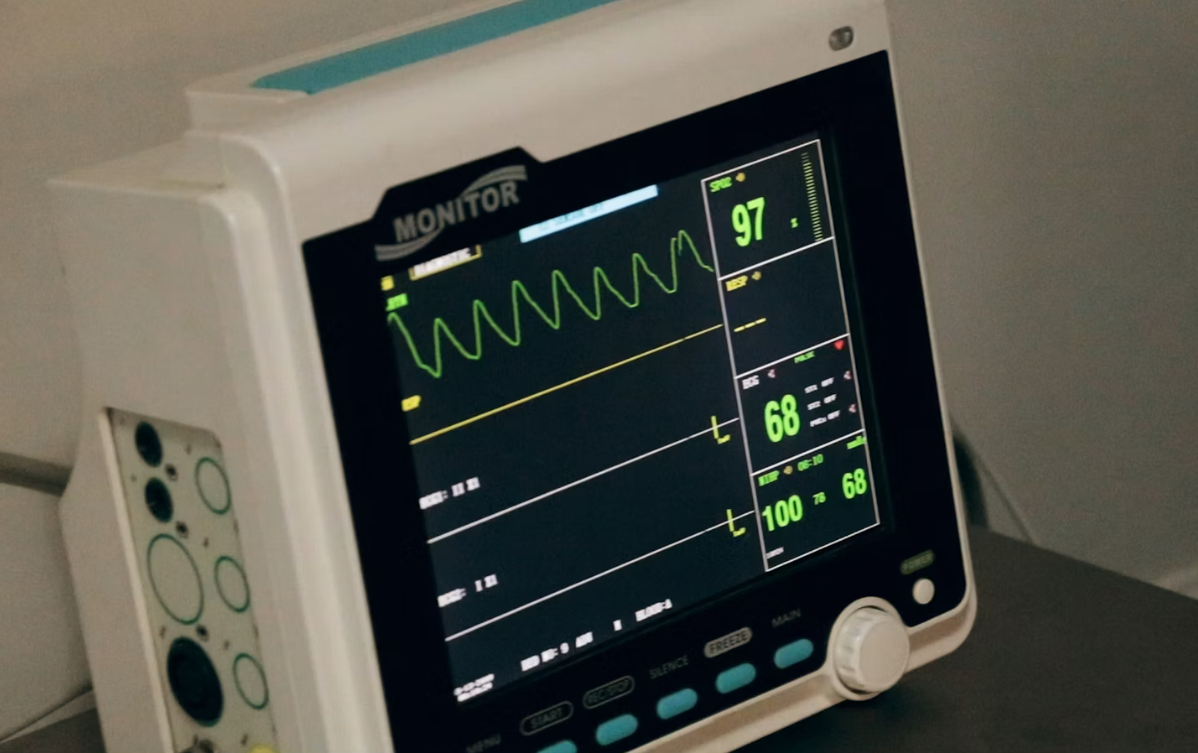
Medical device PCB assembly is governed by a layered standard stack that varies by market and device risk classification. Understanding this architecture is prerequisite to any sourcing decision.
ISO 13485:2016 is the global baseline for medical device quality management. Unlike ISO 9001, it mandates risk management throughout the product lifecycle, design control documentation, and sterile device validation protocols.
FDA 21 CFR Part 820 (QSR) governs U.S. market access. It shares DNA with ISO 13485 but adds specific design control, corrective action, and complaint handling requirements.
The FDA and EU MDR classify devices by risk:
Class I (low risk): Bandages, surgical instruments. PCB assembly typically requires ISO 13485 and basic traceability.
Class II (moderate risk): Blood pressure monitors, glucose meters, dialysis machines. Requires 510(k) premarket notification in the U.S. PCB assembly must support extensive design documentation and clinical equivalence claims.
Class III (high risk): Pacemakers, implantable defibrillators, neurostimulators. Requires Premarket Approval (PMA) in the U.S. PCB assembly must achieve the highest reliability grades with full material genealogy and sterile packaging validation.
Medical PCBs universally require IPC Class 3 (high-reliability) standards:
IPC-6012 Class 3: Manufacturing performance requirements for rigid PCBs—controlled materials, plating thickness, hole integrity, dielectric performance.
IPC-A-600 Class 3: Visual acceptance criteria for finished boards—zero breakout, superior conductor definition, no delamination.
IPC-A-610 Class 3: Assembly workmanship standards for life-critical electronics.
J-STD-001 Class 3: Soldering process requirements with verified solder joint reliability.
IEC 60601-1 defines safety requirements for medical electrical equipment, including isolation, leakage current limits (<10µA for patient-connected circuits), and creepage/clearance distances (>8mm for reinforced insulation in 2.5kV systems).
EN 55011 / IEC 60601-1-2: EMC requirements ensuring devices do not interfere with or suffer interference from other equipment in clinical environments.
Medical PCB materials must satisfy two masters: electrical performance and biological safety. This dual requirement eliminates many standard industry options.
High-Tg FR-4: Standard for most non-implantable medical devices. Glass transition temperature >170°C ensures stability through reflow and sterilization cycles.
Polyimide (PI): Preferred for flexible and implantable devices due to heat resistance, mechanical stability, and biocompatibility. Essential for thin-film neural electrodes and wearable patches.
Ceramic PCBs: Used in high-frequency imaging (MRI coils, ultrasound transducers) and implantable RF devices where thermal conductivity and dielectric stability are critical.
ENIG (Electroless Nickel Immersion Gold): Dominant choice for medical devices due to flatness, oxidation resistance, and wire-bondability for chip-on-board applications.
ENEPIG (Electroless Nickel Electroless Palladium Immersion Gold): Superior for high-reliability applications requiring extended shelf life and multiple reflow cycles without black pad defects.
OSP (Organic Solderability Preservative): Limited to single-reflow, short-lifecycle consumer-grade medical accessories.
Medical devices undergo terminal sterilization before clinical use. PCB materials must survive the chosen method without degradation:
| Sterilization Method | Temperature/Exposure | Material Risk | Compatible Materials |
|---|---|---|---|
| Steam Autoclave | 121–134°C, saturated steam | Hydrolysis of laminates; polymer embrittlement | PPSU, PEEK, high-Tg FR-4, polyimide |
| Ethylene Oxide (EtO) | 45–60°C, gas penetration | Residual gas absorption; seal degradation | Most polymers; requires aeration validation |
| Gamma Radiation | 25–50 kGy ionizing radiation | Polymer chain scission; embrittlement | Cross-linked polymers, ceramics, certain silicones |
| Hydrogen Peroxide Plasma | 45–50°C, low-temperature plasma | Oxidative surface degradation | Metals, compatible plastics |
For implantable devices, materials must additionally pass ISO 10993 biological evaluation (cytotoxicity, sensitization, irritation, systemic toxicity) and, for U.S. markets, USP Class VI testing.
Conformal Coating and Potting Medical devices exposed to bodily fluids or sterilants require protective barriers:
Parylene C: Ultra-thin, pinhole-free, biocompatible. Gold standard for implantable electronics.
Medical-grade silicone conformal coating: Flexible, moisture-resistant, compatible with gamma and EtO sterilization.
Epoxy potting: Used for encapsulating high-voltage isolation barriers in defibrillators and electrosurgical units.
Medical PCB assembly demands process controls that exceed even automotive and aerospace norms in specific dimensions.
Flux residues and ionic contaminants in medical devices can cause electrochemical migration, dendritic growth, and leakage currents that directly threaten patient safety. Medical assemblies require:
ROSE (Resistivity of Solvent Extract) testing or ion chromatography to verify ionic residues remain below strict thresholds.
Ultrasonic cleaning with deionized water and medical-grade solvents.
Cleanroom assembly (ISO Class 7 or better) for implantable and sterile devices to prevent particulate-induced shorts.
Miniaturization in medical devices—hearing aids, continuous glucose monitors, capsule endoscopes—demands placement accuracy beyond standard SMT:
01005 and 008004 chip components: Placement accuracy ±0.015mm.
Micro-BGA and WLCSP (Wafer-Level Chip Scale Packages): Require X-ray inspection for void and bridging detection.
Wire bonding and chip-on-board (COB): Common in implantables where package size must be minimized.
For devices measuring micro-ohm-level resistances—such as impedance sensors in dialysis machines or current paths in neurostimulators—standard two-wire continuity testing is insufficient. Four-terminal Kelvin testing eliminates lead and contact resistance, verifying the integrity of fine-pitch solder joints and critical grounding paths. This test is mandatory for Class III and life-support device assemblies.
Every medical PCB must be traceable to its raw materials, production lot, and test data. A robust medical assembly partner maintains:
Component-level traceability: Manufacturer part number, lot code, date code, and distributor source for every component.
Device History Record (DHR): Complete manufacturing documentation from incoming inspection through final test.
Certificate of Conformance (CoC): Batch-level certification of compliance to specified standards.
UDI (Unique Device Identification): For FDA-regulated devices, serialization supporting post-market surveillance and recall management.
Medical PCB testing extends far beyond AOI and functional verification.
| Test Category | Purpose | Typical Methods |
|---|---|---|
| Visual & Optical Inspection | Detect solder defects, component alignment, contamination | AOI, high-resolution microscopy |
| X-Ray Inspection | Verify BGA/QFN solder joint integrity, void analysis | 2D/3D X-ray, CT for complex stacks |
| Electrical Test | Verify continuity, isolation, impedance | ICT, flying probe, 4-wire Kelvin |
| Environmental Stress | Validate long-term reliability under clinical conditions | Thermal cycling (-40°C to +85°C), HAST, vibration |
| Ionic Cleanliness | Prevent electrochemical migration | ROSE, ion chromatography |
| EMC Pre-Compliance | Ensure electromagnetic compatibility before formal testing | Conducted emissions, radiated emissions, ESD immunity |
| Sterilization Validation | Confirm material and assembly survival through sterilization cycles | EtO residuals testing, gamma dose mapping, autoclave cycling |
Not every ISO 13485-certified CM is equipped for your specific medical device. Use this framework:
| Criterion | Weight | Verification Questions |
|---|---|---|
| Regulatory alignment | 25% | Do you hold ISO 13485, FDA registration, and IPC-A-610 Class 3/J-STD-001 Class 3? Have you supported 510(k) or PMA submissions? |
| Medical domain experience | 20% | What Class II/III devices have you assembled? Do you have experience with implantables, life-support, or sterile devices? |
| Material and sterilization expertise | 20% | Can you source ISO 10993/USP Class VI materials? Do you validate sterilization compatibility? |
| Traceability systems | 15% | What is your lot-code granularity? Can you generate DHRs and CoCs automatically? Do you support UDI serialization? |
| Testing capability | 15% | Do you offer 4-wire Kelvin testing, ion chromatography, and environmental stress screening in-house? |
| Cleanroom and contamination control | 5% | What is your cleanroom classification? What is your ionic contamination control protocol? |
Red flags: No Class 3 IPC certifications; inability to explain DHR generation; no stated sterilization validation process; quotes without itemized NRE and testing costs.
Device: Class II wearable cardiac monitor (patch-based ECG with 7-day wear time)
Challenge: The OEM's previous CM lacked ISO 13485 certification and could not provide component-level traceability or ionic cleanliness certification. The FDA's 510(k) review issued a deficiency letter citing insufficient manufacturing documentation.
Solution: The OEM transferred assembly to a medical-focused CM with:
ISO 13485 and FDA-registered facility
IPC-A-610 Class 3 and J-STD-001 Class 3 certified workforce
In-house ion chromatography and 4-wire Kelvin testing
Automated DHR generation with component lot traceability
Flex-rigid PCB assembly capability for the conformable patch substrate
Outcome: The CM conducted a DFM review that eliminated a single-source BGA in favor of a QFN with equivalent performance but multi-source availability. Ionic cleanliness testing revealed flux residue above acceptable thresholds on the previous build; the new CM's controlled reflow and post-assembly cleaning process reduced residues by 90%. The resubmitted 510(k) package included complete DHRs and CoCs, achieving FDA clearance within 90 days.
Medical PCB assembly is not a commodity service differentiated by price per square inch. It is a regulated manufacturing discipline where patient safety, regulatory approval, and product liability intersect. The right assembly partner does not merely solder components to a board—they validate materials for biocompatibility, verify cleanliness to prevent electrochemical failure, document every lot for regulatory defense, and design test protocols that prove reliability under clinical stress.
For medical device OEMs, the cost of selecting the wrong assembly partner is measured not just in dollars, but in 510(k) rejections, field failures, recalls, and—most critically—patient harm. The investment in a qualified, experienced medical PCB assembly partner is not overhead. It is insurance against catastrophic failure and a foundation for sustainable market access.
As medical devices become smaller, smarter, and more connected, the complexity of their underlying electronics will only increase. The manufacturers that build compliance, traceability, and reliability into their assembly operations today will define the standards of medical electronics tomorrow.
Find Partners, Not Just Suppliers
Expert OEM & PCBA manufacturing tailored to your exact specifications. Contact us today to discuss your project and discover a more collaborative way to manufacture.
Get a Fast Quote & Free DFM Review
Related PCB Assembly Service