Phone: +86-137 5102 2384
Phone: +86-137 5102 2384
Jul. 09, 2026
Share:
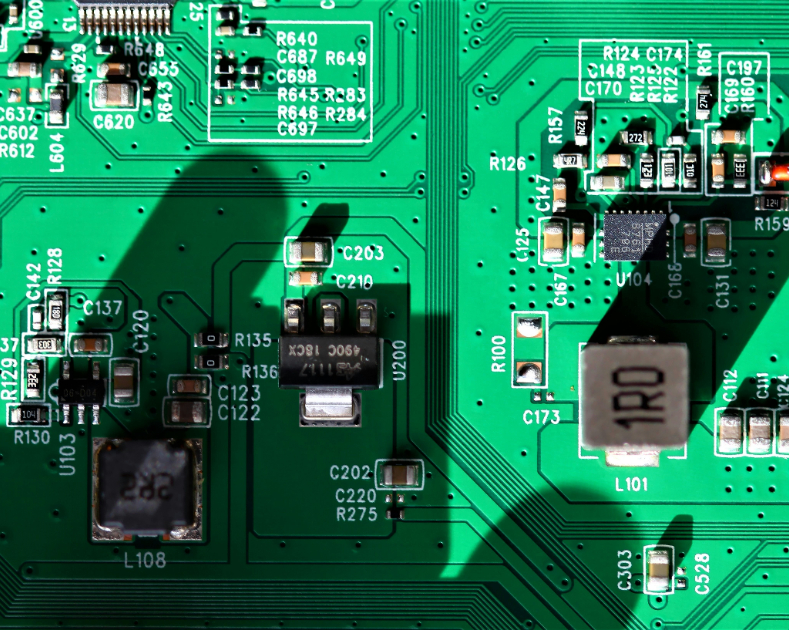
A security system is only as strong as its weakest node. When a perimeter camera fails at 2:00 AM during an intrusion attempt, when an access control reader drops offline during a breach, or when a network video recorder (NVR) corrupts footage due to a power surge, the failure is rarely visible to the end user. It is almost always rooted in the printed circuit board assembly (PCBA) that powers, processes, and connects the device.
Unlike consumer electronics, where a reboot or replacement is an inconvenience, security system failures create vulnerability windows—periods when assets, personnel, and data are unprotected. Security PCB assemblies must therefore operate with a different standard of reliability: 24/7 continuous duty, often in uncontrolled environments, with lifespans measured in years rather than product refresh cycles. They must simultaneously handle high-definition video streams, Power-over-Ethernet (PoE) power delivery, real-time analytics, and encrypted network communication, all while resisting tampering, electromagnetic interference, and environmental stress.
This convergence of demands—always-on reliability, high-speed video processing, outdoor hardening, and cybersecurity—makes security system PCB assembly a specialized engineering discipline.
Security devices are infrastructure, not gadgets. An IP camera deployed in a parking garage may run continuously for five to seven years. An access control panel in a corporate lobby processes thousands of credential validations daily. Component selection and assembly quality must reflect this duty cycle:
Industrial-grade capacitors: Aluminum electrolytics rated for 105°C with 10,000+ hour endurance are standard; 125°C-rated solid polymer capacitors are preferred for PoE power supplies where thermal stress is concentrated.
Component derating: Resistors and semiconductors are operated well below their maximum ratings (typically at 50–70% of rated voltage/current) to extend life and reduce failure rates. The assembly partner must verify that the BOM reflects derating discipline, not just functional adequacy.
Burn-in testing: Security PCBs often undergo 48–72 hours of powered burn-in at elevated temperature to precipitate early-life failures (infant mortality) before deployment. A failed BGA solder joint on a video encoder SoC is far less costly to catch in the factory than in a ceiling-mounted camera requiring a lift truck for replacement.
Security systems span environments from climate-controlled server rooms to outdoor perimeters in extreme climates:
Operating temperature range: Outdoor cameras and perimeter sensors must operate from -40°C to +70°C (and increasingly +85°C for desert deployments). This demands industrial-grade components with guaranteed specs across the full range, not just commercial-grade parts rated for 0°C to +70°C.
Thermal management in sealed enclosures: Outdoor dome and bullet cameras are often IP66/IP67 sealed with no airflow. Heat from the image sensor, PoE PD controller, and H.265 encoder must be conducted through the PCB to the aluminum housing via thermal vias, graphite sheets, or phase-change pads. Assembly partners must ensure thermal interface materials are correctly applied and that reflow profiles do not degrade heat-conductive adhesives.
Conformal coating: Acrylic, polyurethane, or parylene conformal coating protects outdoor and humid-environment PCBs from moisture ingress, dust, and corrosive atmospheres. The coating must be applied with masking to protect lens mounts, connector contacts, and pressure-equalization vents.
PoE has become the dominant power architecture for security devices, but it introduces unique assembly challenges:
Magnetics integration: PoE requires integrated magnetics modules (discrete magnetics or integrated connector modules) that isolate data and power paths. These magnetics are sensitive to reflow temperature profiles; excessive heat can degrade the ferrite core or insulation.
High-power PoE (IEEE 802.3bt / PoE++): Delivering up to 90W over Ethernet enables PTZ cameras with heaters and IR illuminators, but it concentrates significant heat in the PD (Powered Device) controller and DC-DC converter. The PCB assembly must use heavy copper planes (2–3 oz) for power paths and ensure adequate solder joint area for thermal dissipation.
Surge protection: Outdoor PoE devices are exposed to lightning-induced surges. PCB assemblies integrate TVS diodes, gas discharge tubes (GDTs), and MOV arrays at the Ethernet magnetics input. These protection devices must have low-inductance connections to be effective; poor solder joints or long trace stubs render them useless.
Modern security cameras capture 4K/8K resolution at 30–60 fps with H.265 encoding, while NVRs aggregate 32–128 channels of video:
High-Density Interconnect (HDI): Video encoder SoCs (e.g., Ambarella, HiSilicon, Texas Instruments) use 0.4–0.5 mm pitch BGA packages with hundreds of balls. Routing DDR4/LPDDR5 memory interfaces and MIPI CSI-2 sensor inputs requires 8–12 layer HDI boards with microvias and strict impedance control (±10%).
MIPI and FPD-Link: Camera modules use high-speed serial interfaces (up to 4.16 Gbps per lane for MIPI CSI-2) to connect image sensors to the main processor. These differential pairs require 100 Ω impedance control, matched trace lengths (±5 mils), and via stub minimization to prevent signal degradation that manifests as image artifacts.
Ethernet signal integrity: Gigabit Ethernet (and emerging 2.5G/5G/10GBase-T in high-end cameras) requires proper magnetics layout, controlled impedance on TX/RX pairs, and clean ground referencing to prevent packet loss that would corrupt video streams.
As security devices become network endpoints, their PCBs must incorporate hardware-level security:
Secure elements and TPMs: Trusted Platform Modules (TPMs) or secure microcontrollers store cryptographic keys for device authentication and encrypted boot. These components require controlled soldering profiles and ESD protection during assembly.
Anti-tamper meshes: High-security devices (e.g., biometric access control, vault sensors) use PCB-mounted tamper-detection meshes or conductive ink patterns that trigger secure erasure if the enclosure is breached. Assembly must ensure mesh continuity and reliable connection to the security MCU.
Encrypted storage: eMMC or NAND flash with AES-256 encryption is soldered directly to the board to prevent physical extraction of recorded footage. X-ray inspection is critical to verify void-free solder joints beneath these BGA packages, as field failures would render stored evidence inaccessible.
A modern smart building may contain thousands of security, communication, and IoT devices operating in close proximity:
Emissions control: Switching PoE converters, clock harmonics from video SoCs, and IR LED PWM drivers can radiate noise that interferes with Wi-Fi, cellular, and two-way radio systems. PCB assemblies must include proper filtering, shielding cans over noisy sections, and controlled return paths.
Susceptibility immunity: Security devices must not false-trigger due to nearby radio transmitters, arc welders, or vehicle ignition systems. Assembly quality directly impacts immunity—poorly grounded shielding cans or floating copper pours can act as antennas.
Standard FR-4 (Tg 130–140°C) is insufficient for PoE-powered outdoor cameras where internal temperatures can exceed 110°C in direct sunlight. Security system PCBs typically use:
High-Tg FR-4 (Tg ≥ 170°C): For general indoor control panels and NVR motherboards.
Mid-Tg with high thermal conductivity: Some camera PCBs use thermally enhanced FR-4 (1.0–2.0 W/m·K) to spread heat from the SoC to the housing mounting points.
Aluminum IMS: Used in IR illuminator boards and high-power LED driver modules where concentrated heat must be spread laterally before reaching the heatsink.
ENIG (Electroless Nickel Immersion Gold): Preferred for fine-pitch BGA SoCs and long shelf life. The flat surface ensures reliable solder joint formation.
Immersion Tin or OSP: Sometimes used for cost-sensitive alarm sensors, but with shorter shelf-life constraints.
Hard Gold: Used for edge connectors and card-edge interfaces in NVR backplanes where repeated insertion is required.
Fine-pitch BGA placement: Security SoCs and network processors require nitrogen reflow, 3D X-ray inspection for void analysis (target <25% void area on thermal pads), and warpage-controlled profiles to prevent corner solder opens.
0201 and 0402 passives: Compact camera modules use small passives for decoupling and filtering, demanding ±25 µm placement accuracy.
Package-on-Package (PoP): Some compact camera modules stack DDR memory atop the application processor, requiring precise flux dipping and placement force control.
Security PCBs combine dense digital logic with robust power and connectivity:
High-current through-hole connectors: PoE RJ45 jacks with integrated magnetics, terminal blocks for alarm inputs, and power connectors require selective wave soldering or robotic selective soldering to ensure reliable barrel fill without exposing nearby fine-pitch components to wave temperatures.
Shielding cans: Stamped metal shields are placed over clock oscillators, PoE converters, and RF sections. These require custom nozzles on placement machines and proper grounding clip soldering to ensure effective EMI containment.
Heatsinks and thermal hardware: Many camera SoCs require clip-on or adhesive-bonded heatsinks. The assembly partner may pre-apply thermal interface material and verify mounting pressure to ensure adequate thermal contact without crushing the BGA package.
Security devices often require pre-assembled cable harnesses:
FPC/FFC integration: Compact dome cameras use flexible printed circuits to connect the image sensor board to the main processing board across a gimbal mechanism. These require specialized fixturing during soldering and careful bend-radius control.
Pigtail cables: Outdoor cameras often ship with pre-attached weatherproof Ethernet pigtails. The assembly partner must pot or gasket the cable entry point to maintain IP67 integrity.
The workhorse of modern security:
Image sensor integration: Large-format CMOS sensors (1/1.8" to 1") require ultra-clean assembly environments to prevent dust particles on the sensor glass, which would appear as dead pixels in the video feed.
IR cut filter and illuminator drivers: Day/night cameras integrate mechanical IR cut filters and 850 nm/940 nm IR LED arrays. The LED driver PCB must manage PWM dimming without generating EMI that interferes with the video encoder.
Motor drivers (PTZ): Pan-tilt-zoom cameras use stepper or BLDC motors controlled by dedicated driver ICs. These motor drivers generate electrical noise that must be isolated from sensitive video and network circuits through layout partitioning and grounded shielding.
The central nervous system of video security:
Multi-channel aggregation: A 64-channel NVR backplane must route 64 Gigabit Ethernet PHYs to a central switching fabric. This requires high-layer-count PCBs (12–16 layers) with careful power plane segmentation to prevent crosstalk.
Storage interfaces: SATA/SAS connectors for hard drives and M.2 slots for SSDs require controlled impedance and proper grounding. Hot-swap backplanes need power sequencing and inrush current control.
Redundant power: Enterprise NVRs use redundant PSU inputs with ORing controllers. The assembly must ensure that failover circuits operate reliably under load transition.
Credential readers: RFID, NFC, and biometric (fingerprint, iris, facial recognition) readers integrate sensitive analog front-ends that detect microvolt-level signals. Assembly cleanliness, grounding, and isolation from switching power supplies are critical.
Door controllers: These boards switch 12V/24V lock power and monitor door position sensors. They require relay or MOSFET outputs with flyback protection and isolation barriers between low-voltage logic and lock power.
Alarm panels: Zone expansion boards monitor dozens of sensor loops. Each zone requires ESD protection, tamper detection, and supervised wiring fault detection.
Aerial and ground-based security patrol systems:
Vibration resistance: Drone flight controllers and camera gimbals experience high-frequency vibration. Components require adhesive staking and underfill to prevent solder fatigue.
Weight optimization: Every gram reduces flight time. PCBs use 0.8 mm or thinner substrates with high-density layout to minimize size and weight.
Dual-redundant systems: Critical flight and camera control circuits may be duplicated on separate PCBs with cross-monitoring for fail-safe operation.
Buried cable sensors and accelerometers: These outdoor sensors must survive ground moisture, freeze-thaw cycles, and rodent damage. Potting in urethane or epoxy is standard, with assembly partners ensuring that sensitive MEMS accelerometers are not stressed by the potting compound's cure shrinkage.
Thermal cycling: -40°C to +70°C (or +85°C for extreme environments) to validate solder joint integrity and component parameter stability.
Humidity testing: 85°C/85% RH biased testing to verify conformal coating effectiveness and prevent corrosion of outdoor camera PCBs.
Salt fog: For coastal and marine security deployments, per ASTM B117 or IEC 60068-2-11.
PoE load testing: Verifying that the PD controller correctly negotiates power class and that the DC-DC converter maintains regulation across input voltage and load variations.
Video pipeline test: Streaming test patterns through the encoder to verify H.265/H.264 output integrity, bitrate stability, and network packet transmission.
Night mode validation: Testing IR LED current regulation, IR cut filter actuator operation, and day/night switching logic.
Cybersecurity boot verification: Confirming secure boot chain integrity, TPM attestation, and encrypted storage accessibility.
Vibration testing: Per IEC 60068-2-64 (random vibration) for cameras mounted on poles, vehicles, or drones.
IP validation: Pressure testing sealed camera housings to verify that PCB-mounted gaskets and cable glands maintain ingress protection after thermal cycling.
IEC 61000-4-5 surge testing: Applying 1–4 kV surges to Ethernet and power ports to validate protection device performance and PCB trace robustness.
IEC 61000-4-2 ESD testing: Contact and air-discharge testing (up to ±8 kV contact, ±15 kV air) to ensure that ESD protection diodes and layout grounding prevent latch-up or reset.
Cameras are evolving from video transmitters to intelligent sensors:
AI accelerator integration: Dedicated NPUs (Neural Processing Units) for real-time object detection, facial recognition, and behavior analysis require high-bandwidth memory (LPDDR4X/5) and power delivery networks capable of handling transient current spikes.
Thermal design for AI workloads: AI inference generates significant heat. Advanced camera PCBs use embedded copper coins, vapor chambers, or thermoelectric coolers to maintain SoC junction temperatures within spec.
5G module integration: Security devices on private 5G networks integrate sub-6 GHz and mmWave modules. These require RF-specific layout, antenna matching, and shielding that general-purpose PCB assemblers may lack.
Network slicing support: Hardware must support multiple simultaneous network interfaces (5G, Wi-Fi 6E, Ethernet) without self-interference.
Hardware root of trust: Every security device PCB will increasingly include a hardware security module (HSM) for device attestation and mutual TLS authentication.
Over-the-air (OTA) update reliability: Robust flash memory assembly and power-fail-safe filesystems ensure that firmware updates do not brick remote devices.
Long-life designs: As security infrastructure refresh cycles extend, assemblies must use lead-free high-reliability solders (e.g., Innolot alloys) and components with guaranteed 10–15 year availability.
Repairable modules: Trend toward field-replaceable camera modules and controller cards rather than full-device replacement, influencing connector selection and modular PCB partitioning.
PCB assembly for security systems is not a generic manufacturing service—it is a reliability engineering discipline where the stakes extend beyond product returns to human safety and asset protection. A failed solder joint under a PoE magnetics module, a void in a video encoder BGA, or a compromised tamper-detection mesh can transform a security device into a liability.
Success requires assembly partners who understand that security PCBs must survive decades of continuous operation, extreme environmental stress, and sophisticated cyber-physical threats. From the thermal management of a 90W PoE++ camera to the signal integrity of a 64-channel NVR backplane, from the anti-tamper mesh of a biometric reader to the vibration resilience of a security drone, every assembly decision determines whether a system protects or fails.
As security systems evolve from passive recording devices to AI-enabled, network-native sensors, the complexity of their PCB assemblies will only increase. The partners who can navigate this intersection of high-speed digital design, power electronics, environmental hardening, and hardware security will define the next generation of physical security infrastructure.
Three critical differences: (1) 24/7 reliability—security devices operate continuously for years, requiring industrial-grade components, burn-in testing, and derating; (2) Environmental hardening—outdoor cameras must survive -40°C to +70°C, humidity, and salt fog, requiring conformal coating, sealed enclosures, and wide-temperature component qualification; and (3) PoE integration—most modern cameras are powered over Ethernet, requiring integrated magnetics, 90W power delivery capability, and surge protection that consumer devices never need.
PoE introduces several assembly-specific challenges: (1) Magnetics sensitivity—PoE transformer modules are sensitive to reflow temperatures and must be profiled carefully; (2) Thermal concentration—high-power PoE++ (up to 90W) concentrates heat in the PD controller and DC-DC converter, requiring heavy copper planes and thermal vias; (3) Surge protection—outdoor PoE devices need TVS diodes and GDTs at the magnetics input with low-inductance connections, making solder joint quality critical; and (4) Isolation—the assembly must maintain creepage and clearance between the 48V–57V PoE rail and low-voltage logic circuits.
Security PCBs require application-specific validation: (1) Burn-in testing—48–72 hours of powered operation at elevated temperature to precipitate infant mortality; (2) Environmental testing—thermal cycling (-40°C to +70°C), humidity (85°C/85% RH), and salt fog for outdoor devices; (3) Surge and ESD testing—IEC 61000-4-5 surge (1–4 kV) and IEC 61000-4-2 ESD (±8 kV contact/±15 kV air) to validate protection circuits; (4) Video pipeline functional test—end-to-end H.265 encoding and streaming verification; and (5) Cybersecurity boot verification—confirming secure boot chain and TPM attestation for devices with hardware security.
Image sensors (especially large-format CMOS) are extremely sensitive to dust and contamination. Assembly partners maintain ISO Class 7 or better cleanroom environments for sensor integration, use ionized air to neutralize static-attracted particles, and apply protective tape or temporary covers during reflow and handling. Post-assembly, sensors are inspected under high-magnification optics to verify that no solder flux residue, dust, or coating overspray has landed on the glass surface, as any contamination would appear as permanent artifacts in the video image.
Hardware cybersecurity prevents physical tampering and ensures device authenticity. Assembly implementations include: (1) Secure elements/TPMs—soldered BGA or QFN packages that store cryptographic keys and perform secure boot attestation; (2) Anti-tamper meshes—conductive traces or inks on the PCB that trigger secure erasure if the enclosure is breached; (3) Encrypted storage—eMMC or NAND flash with AES-256 encryption soldered directly to prevent physical data extraction; and (4) Secure supply chain—component traceability and authorized distribution to prevent counterfeit ICs that could contain hardware backdoors. Assembly partners must handle these security components with ESD protection and verify solder joint integrity via X-ray, as field failures could lock out legitimate access to the device.
Find Partners, Not Just Suppliers
Expert OEM & PCBA manufacturing tailored to your exact specifications. Contact us today to discuss your project and discover a more collaborative way to manufacture.
Get a Fast Quote & Free DFM Review
Related PCB Assembly Service