Phone: +86-137 5102 2384
Phone: +86-137 5102 2384
Jul. 02, 2026
Share:
The low-altitude economy—encompassing electric vertical take-off and landing (eVTOL) aircraft, logistics drones, agricultural UAVs, and aerial inspection systems—is rapidly transforming urban mobility, supply chains, and industrial operations. At the heart of every one of these vehicles lies a complex network of printed circuit board assemblies (PCBAs) that function as the aircraft's nervous system. From flight control units and battery management systems (BMS) to high-frequency communication modules and motor controllers, PCB assembly quality directly determines flight safety, mission endurance, and operational reliability.
Unlike traditional aerospace applications where cost is secondary to extreme-environment survivability, low-altitude devices must achieve a delicate equilibrium: high reliability under demanding flight conditions, combined with the cost efficiency and scalability required for commercial deployment. A failed flight controller in an autonomous delivery drone or a thermal runaway triggered by a defective BMS can result not only in hardware loss but also in regulatory setbacks and public safety risks. Consequently, PCB assembly for this sector demands specialized expertise that bridges industrial rigor with mass-production economics.
Low-altitude aircraft are acutely weight-sensitive. Every gram affects flight time and payload capacity. However, lightweight materials cannot compromise thermal dissipation or mechanical durability.
High-Tg FR-4: The workhorse substrate for flight control and navigation PCBs, offering adequate thermal stability and cost efficiency for medium-layer-count designs.
Aluminum-backed PCBs (Al-PCBs): Essential for power distribution and LED lighting modules, providing superior heat spreading without the weight penalty of copper-based alternatives.
Low-loss Laminates (e.g., Rogers, Taconic): Critical for millimeter-wave radar, 5G communication links, and high-definition video transmission modules where signal integrity at 6 GHz and above is non-negotiable.
High-thermal-conductivity Dielectrics: Increasingly used in motor driver and BMS assemblies to manage heat from MOSFETs and high-current traces.
Material selection must be driven by subsystem function rather than applying a one-size-fits-all aerospace-grade specification.
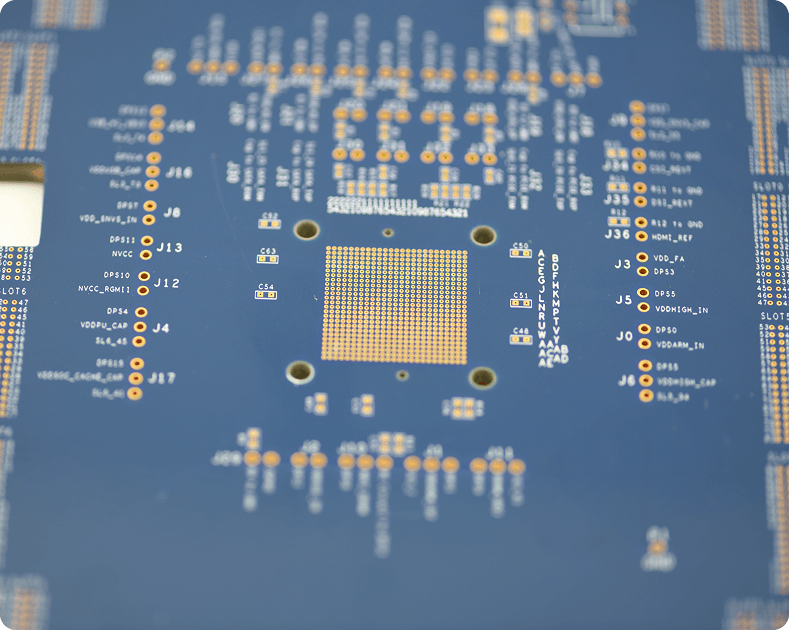
Low-altitude devices integrate a heterogeneous mix of components: fine-pitch BGA processors in flight controllers, high-current through-hole connectors in power distribution boards, and sensitive MEMS sensors requiring ultra-clean assembly environments.
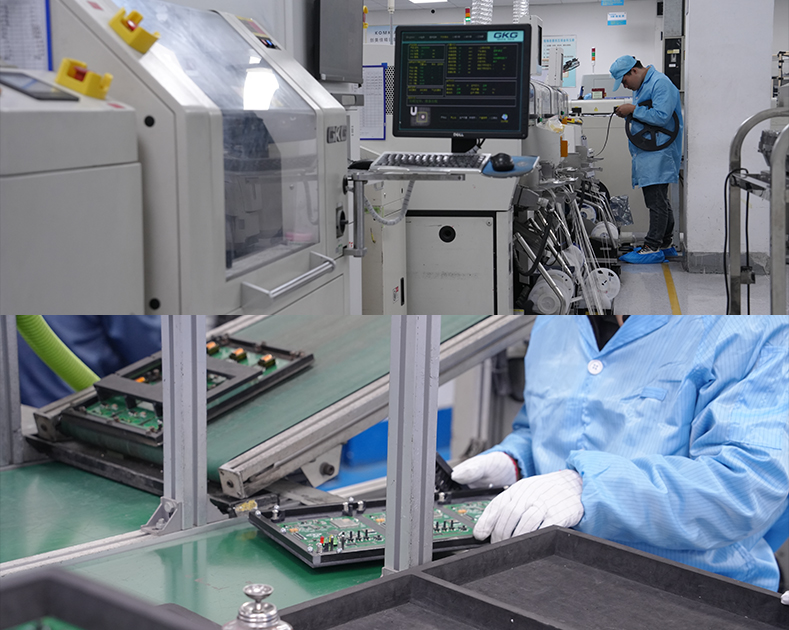
High-precision SMT: Placement accuracy down to ±25 µm is necessary for 0201 passives and 0.4 mm-pitch QFN/BGA packages common in modern flight SoCs.
Mixed-Technology Assembly: Combining surface-mount and selective wave soldering allows robust mechanical retention of large power components alongside dense digital circuitry.
Advanced Inspection: Automated Optical Inspection (AOI) and 3D X-ray inspection are mandatory for detecting voids in BGA solder joints and insufficient fill in high-current through-hole connections—defects that can cause intermittent failures during vibration or thermal cycling.
While low-altitude devices do not face vacuum or deep-space radiation, they encounter severe environmental stressors:
Vibration and Shock: Multi-rotor drones and eVTOLs experience high-frequency vibration from propellers and turbulence. PCB assemblies must pass random vibration testing (e.g., 5–2000 Hz per DO-160G, Section 8) to ensure solder joint integrity and connector retention.
Thermal Cycling: Operating temperatures can swing from -20°C in high-altitude flight to 60°C+ in direct sunlight on the tarmac. Thermal shock testing validates material expansion matching and solder joint fatigue life.
Humidity and Salt Fog: Agricultural drones and coastal logistics UAVs require protection against moisture ingress and salt corrosion, driving the need for conformal coating (acrylic, silicone, or parylene) applied with controlled thickness uniformity.
EMC Pre-Compliance: With dense RF environments (GPS, 5G, Wi-Fi, radar altimeters), PCB assemblies must undergo pre-screening for electromagnetic compatibility to avoid self-interference before formal certification.
DFM in the low-altitude economy prioritizes scalable production alongside technical performance. Key DFM considerations include:
Component Standardization: Using common package types and avoiding sole-source components reduces procurement risk and unit cost at volume.
Thermal Via Optimization: Ensuring adequate but not excessive thermal vias under power pads to prevent reflow issues while maintaining heat dissipation.
Panelization Strategy: Designing boards for efficient panel routing to minimize fabrication waste—a significant cost driver at production scales of thousands of units per month.
Test Point Accessibility: Incorporating adequate test points for ICT (In-Circuit Test) and functional programming to support automated end-of-line testing.
Quality frameworks for low-altitude devices typically reference:
IPC-A-610 Class 3: For eVTOL flight-critical systems and autonomous navigation hardware where high performance and extended life are required.
IPC-A-610 Class 2: Acceptable for many industrial drone applications where continuous performance is important but cost pressures are higher.
DO-160G: Environmental conditions and test procedures for airborne equipment, increasingly adopted by eVTOL manufacturers seeking type certification.
ISO 9001 & IATF 16949: Quality management systems that ensure process repeatability, with IATF 16949 disciplines particularly relevant for BMS assemblies derived from automotive battery technology.
| Step | Description | Criticality for Low-Altitude Applications |
|---|---|---|
| 1. Design Review | Evaluate schematics and PCB layouts for manufacturability, thermal management, and signal integrity. | Ensures flight controller, BMS, and RF modules can coexist without interference; validates impedance control for high-speed data links. |
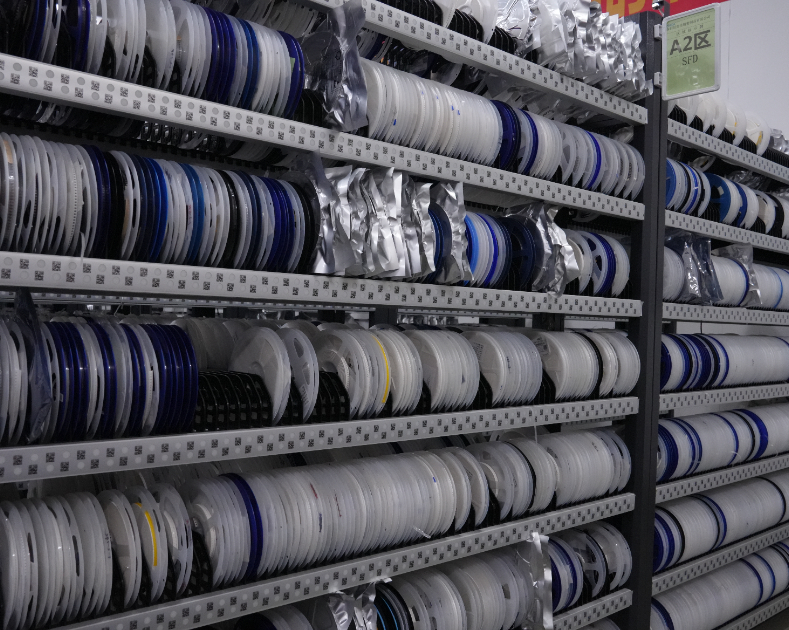
| 2. Material Procurement | Source substrates, components, and solder materials balancing performance, availability, and cost. | Mitigates lead-time risks for AEC-Q qualified power ICs and MEMS sensors; manages counterfeit avoidance through authorized distribution. |
| 3. PCB Fabrication & Assembly | Fabricate bare boards and execute SMT/THT assembly with process-controlled soldering profiles. | Reflow profiling must accommodate mixed thermal masses (large power planes alongside tiny 0201 capacitors) to prevent tombstoning or cold joints. |
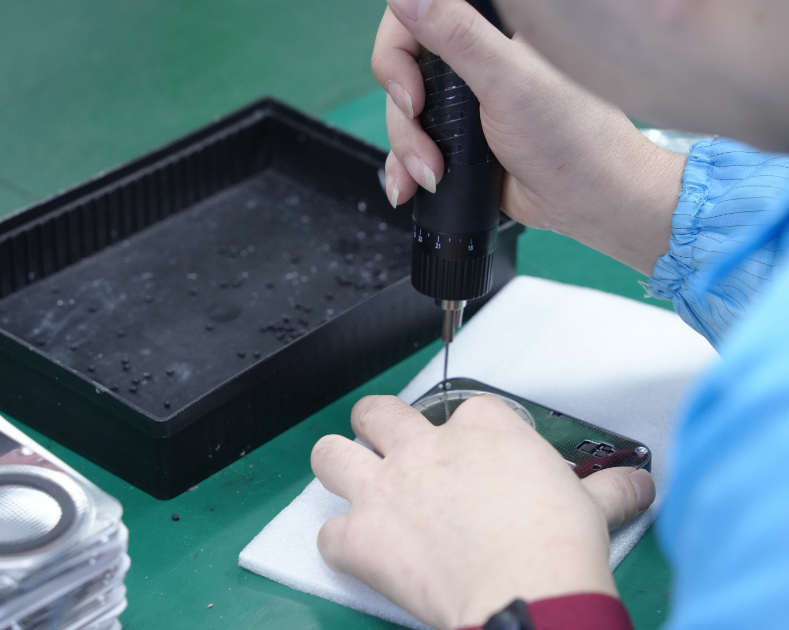
| 4. Testing & Validation | Conduct AOI, X-ray, ICT, functional test, and environmental stress screening. | Functional tests include BMS charge/discharge cycles, ESC load testing, and GNSS module sensitivity verification under simulated flight loads. |
| 5. Final Inspection & Traceability | Perform outgoing quality audit and serialize units for full component lot traceability. | Essential for fleet management, failure analysis, and regulatory recall procedures; supports airworthiness documentation. |
A leading urban air mobility (UAM) startup required a flight control PCBA integrating a quad-core ARM processor, dual-redundant IMUs, 5G communication modems, and isolated CAN bus interfaces for motor control. The assembly partner implemented:
High-layer-count HDI PCB (14 layers) with controlled impedance for DDR4 memory interfaces and RF traces.
Selective conformal coating on IMU and barometer regions to prevent moisture drift, while leaving high-power connectors uncoated for reliable mating.
100% X-ray inspection on all BGA devices and thermal cycling (-40°C to +85°C, 500 cycles) to validate long-term reliability.
The result: zero field failures across 50,000 cumulative flight hours in prototype testing, enabling the client to proceed to type certification with confidence.
Reducing PCB weight by using thinner copper or smaller board form factors can compromise current-carrying capacity and mechanical robustness. Successful designs use copper weight optimization (e.g., 2 oz outer layers for power, 0.5 oz inner layers for signals) and rigid-flex architectures in eVTOL avionics to eliminate heavy wire harnesses while maintaining structural integrity.
The low-altitude economy competes with the automotive and consumer electronics sectors for critical components:
AEC-Q qualified MOSFETs and gate drivers for ESC and BMS applications face 26+ week lead times.
High-precision MEMS IMUs suitable for autonomous navigation are often allocated to Tier-1 automotive customers first.
5G/LTE modules with global certification are constrained by chipset vendor allocation policies.
A qualified assembly partner mitigates these risks through global sourcing networks, strategic buffer inventory, and qualified alternate component engineering.
Commercial viability in the low-altitude economy demands aggressive cost targets. Assembly strategies include:
Panelization efficiency: Maximizing board count per manufacturing panel.
Solder paste optimization: Using no-clean paste formulations to eliminate post-assembly washing costs where ionic cleanliness standards permit.
Test strategy tiering: Deploying 100% functional test for flight-critical boards and sampling-based ICT for auxiliary systems.
Low-altitude device manufacturers navigate a fragmented regulatory landscape:
eVTOL: FAA Part 23/27 or EASA SC-VTOL type certification; DO-160G environmental qualification.
Drones >25 kg: National aviation authority certification (e.g., CAAC TC/PC in China).
Batteries: UN 38.3 lithium battery transport testing; UL 2271 for light electric vehicle batteries.
Radio Equipment: FCC Part 15/27 (USA), CE-RED (Europe), SRRC (China) for telemetry and control links.
PCB assembly partners must provide comprehensive documentation—material declarations, process traveler records, and test data—to support these certification submissions.
As drones and eVTOLs pack more intelligence into smaller volumes, SiP technology is consolidating flight controller CPUs, memory, and power management into single packages. This reduces PCB real estate but demands assembly partners capable of micro-SMT and underfill processes for enhanced mechanical reliability.
Next-generation electric aircraft will push power densities higher. Emerging solutions include:
Embedded copper coin technology in PCBs for localized heat sinking under GaN power stages.
Phase-change thermal interface materials (TIMs) replacing traditional gap pads for motor controller assemblies.
Liquid cooling integration in heavy-lift logistics drone power distribution boards.
High-volume low-altitude device production is driving adoption of:
MES (Manufacturing Execution Systems) with full traceability from component reel to finished unit.
Digital twin simulation of reflow ovens and placement machines to optimize profiles without physical trial runs, reducing NPI (New Product Introduction) cycles by 30–40%.
The shift from remotely piloted to fully autonomous operations requires onboard AI inference. PCB assemblies must now integrate:
AI accelerator modules (e.g., NVIDIA Jetson, Qualcomm RB3) alongside traditional flight controllers.
High-speed interconnects (PCIe, MIPI CSI-2) for multi-camera obstacle detection and SLAM (Simultaneous Localization and Mapping) systems.
Redundant power architectures ensuring graceful degradation if a primary power rail fails during autonomous landing.
PCB assembly is a foundational enabler of the low-altitude economy, bridging the gap between ambitious aerial mobility concepts and commercially deployable hardware. The sector's unique demands—high reliability under vibration and thermal stress, stringent weight constraints, complex regulatory requirements, and uncompromising cost targets—require assembly partners who understand more than just soldering.
Success lies in partnering with manufacturers who bring deep subsystem knowledge (flight control, BMS, propulsion, RF communications), scalable production discipline, and proactive supply chain management to the table. As urban air mobility and autonomous drone networks transition from pilot projects to commercial reality, the quality and efficiency of PCB assembly will remain a decisive competitive advantage—determining not just which products fly, but which companies thrive.
eVTOL assemblies face stricter reliability requirements due to human passenger safety implications. They typically require IPC-A-610 Class 3 workmanship, DO-160G environmental qualification, and redundant system architectures. Consumer drones often operate under Class 2 standards with less rigorous documentation requirements.
A full-service partner provides complete manufacturing documentation (material traceability, process travelers, test reports) required for aviation authority submissions. They can also conduct pre-compliance EMC testing and environmental stress screening that mirrors DO-160G or national drone certification protocols, reducing the risk of formal test failures.
The most prevalent failures are solder joint fractures under vibration (mitigated by optimized reflow profiles and conformal coating), BMS thermal runaway due to poor current path design (addressed through adequate copper weight and thermal vias), and RF interference from inadequate grounding (prevented by strict impedance control and shielding can placement during assembly).
These drones operate in high-humidity, salt-laden, or chemically exposed environments. Conformal coating (typically acrylic, polyurethane, or parylene) creates a dielectric barrier that prevents corrosion, ionic migration, and dendritic growth between closely spaced conductors—failure mechanisms that standard industrial PCBs are vulnerable to in outdoor deployments.
Experienced partners leverage global distribution networks, maintain strategic safety stock of critical AEC-Q components, and employ component engineering teams to identify qualified alternates when primary parts face allocation constraints. This proactive sourcing prevents production delays that could derail certification timelines.
Find Partners, Not Just Suppliers
Expert OEM & PCBA manufacturing tailored to your exact specifications. Contact us today to discuss your project and discover a more collaborative way to manufacture.
Get a Fast Quote & Free DFM Review
Related PCB Assembly Service