Phone: +86-137 5102 2384
Phone: +86-137 5102 2384
Jul. 28, 2026
Share:
A prototype that functions correctly under laboratory conditions is not ready for mass production. This distinction is the most expensive lesson in electronics manufacturing. A design validated on 10 hand-assembled boards may fail systematically when produced by automated equipment at volume. A component readily available from distributors in quantities of 100 may be on 26-week allocation when the order is 10,000 units. A test procedure that takes 15 minutes on a bench may consume 25% of factory capacity when scaled to production volumes.
Mass production readiness is not an extension of prototyping. It is a separate engineering discipline that validates the manufacturability, supply chain resilience, process capability, and economic viability of a design at scale. The decisions made in the weeks before production launch determine whether the factory delivers consistent quality and on-time performance—or descends into rework queues, component shortages, and yield collapse.
This article examines the six interconnected domains that must be validated before a PCB assembly enters mass production.
Before production, the design must undergo a formal Design for Manufacturability (DFM) and Design for Assembly (DFA) review conducted by the manufacturing engineering team—not the design team alone. This review must address:
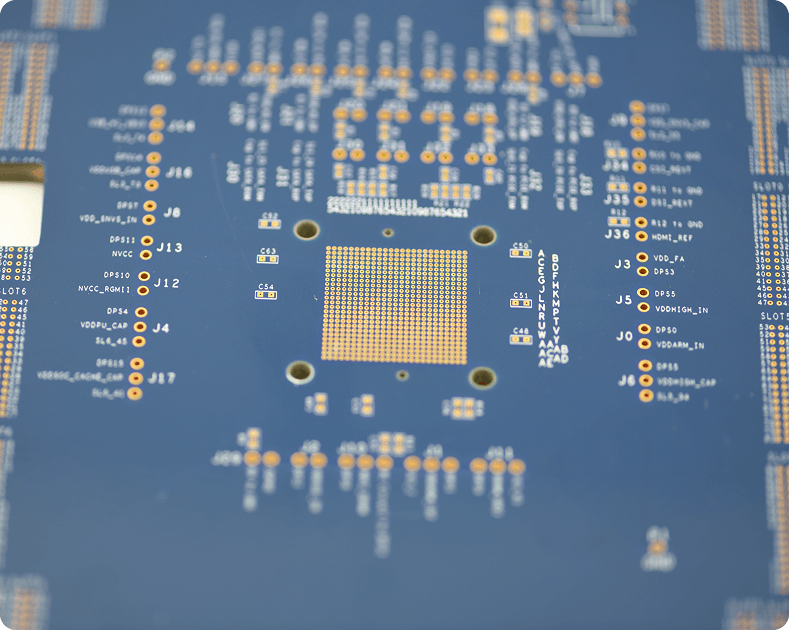
Pad and stencil compatibility: Stencil aperture designs are finalized based on pad geometry, copper weight, and component thermal mass. Aperture area ratios, step-down stencil regions for dense areas, and thermal pad venting patterns are locked.
Component spacing for automation: Minimum spacing rules must allow pick-and-place nozzle access, AOI camera visibility, rework tool clearance, and solder mask web integrity between pads.
Thermal balance: Asymmetric copper traces on small passives must be corrected to prevent tombstoning. Large copper pours acting as heat sinks on one side of a 0402 resistor must be thermally relieved.
Test point accessibility: Adequate test points for ICT (In-Circuit Test) or flying probe must be distributed with sufficient size (≥0.8 mm diameter) and clearance from tall components. JTAG boundary scan chains must be verified for integrity.
The DFM review is not a suggestion session; it is a gate. Unresolved DFM issues must be corrected before the design is released for production. Once released, the design enters ECO (Engineering Change Order) control—any post-release change requires formal impact analysis, cost assessment, and re-qualification.
A production-ready BOM is not a parts list; it is a procurement and process control document. Before mass production, the BOM must be:
100% defined: No "TBD" items, no placeholder components, no unqualified alternates.
Scrubbed for availability: Every component cross-referenced against distributor and manufacturer inventory with confirmed lead times. Long-lead items (typically power ICs, precision analog parts, and specialized connectors) must be on order with delivery dates aligned to the production ramp schedule.
Qualified for alternates: For single-source components, at least one qualified alternate must be documented, tested, and approved. If the primary source falls into allocation, production does not stop.
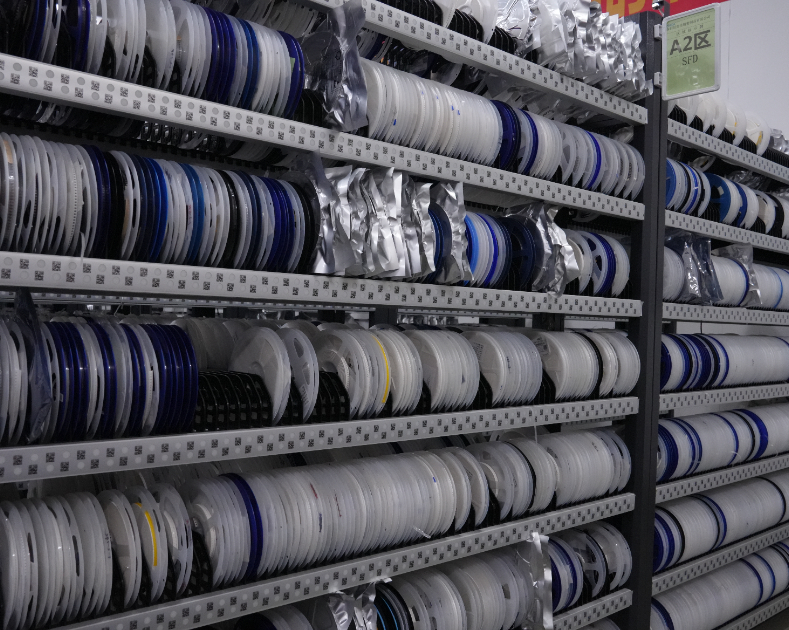
Packaging verified: All components must be available in packaging compatible with automated assembly—tape-and-reel, trays, or tubes. Bulk or bagged components require manual loading or third-party reeling, adding cost and delay.
Mass production requires supplier relationships, not transactional purchasing. The AVL defines qualified manufacturers and distributors for each component. Qualification criteria include:
Authorized distribution: Components sourced through franchised distributors or directly from manufacturers to prevent counterfeit or substandard parts.
Component certifications: Automotive applications require AEC-Q100/101/200 qualified components. Medical devices require biocompatibility and sterilization validation. Military applications require DESC or MIL-PRF documentation.
Lot traceability: The supplier must provide Certificates of Conformance (C of C), date codes, and lot numbers for every shipment. This traceability is mandatory for failure analysis, recalls, and regulatory audits.
Mass production introduces step-functions in procurement economics:
MOQ step-up: A component purchased in quantities of 500 from a distributor may cost 3× more per unit than the same component purchased in reels of 3,000 from the manufacturer. The production plan must justify inventory carrying costs against unit price reduction.
Long-lead-time buffering: Components with 16–26 week lead times must be ordered based on rolling forecasts, not firm orders. This requires forecast commitments and potentially non-cancelable, non-returnable (NCNR) agreements.
VMI (Vendor Managed Inventory): For high-volume, stable-demand components, VMI arrangements place inventory at the factory or a nearby hub, billing only upon consumption. This reduces working capital requirements and stockout risk.
The bare board supplier must be qualified for volume production, not just prototype fabrication:
Process capability: The fabricator must demonstrate consistent impedance control, plating thickness, and registration accuracy at volume. Prototype shops optimized for 2-day turnaround often lack the process control for 10,000-panel consistency.
Panelization strategy: Production panel layouts must be optimized for assembly efficiency (maximizing board count per panel while maintaining tooling rails and fiducials) and depanelization method (routing, V-scoring, or laser).
Material certification: Laminate materials must meet IPC-4101 slash sheet requirements for Tg, Td, and CTE. For high-reliability applications, material lot traceability and outgassing data (ASTM E595 for aerospace) may be required.
Before the first production unit is built, the assembly process is formally documented and locked:
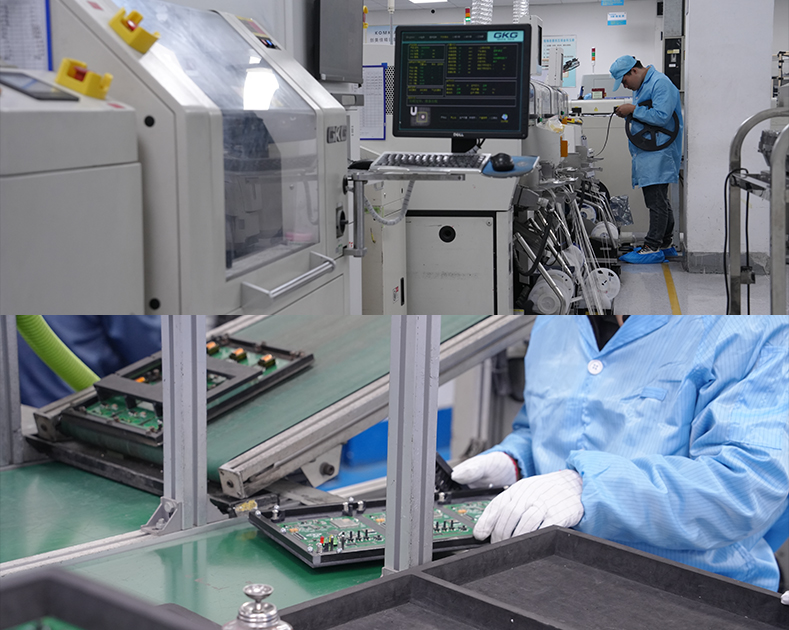
Reflow profile: Validated for the specific product using thermocouples on representative boards. The profile satisfies solder paste manufacturer specifications for preheat slope, time above liquidus (TAL), peak temperature, and cooling rate. The profile is verified at defined intervals during production.
Stencil design: Aperture geometries, thicknesses, and step-down regions are locked. Stencil wear limits are defined (typically 100,000+ prints for laser-cut stainless steel).
Placement programs: Pick-and-place machine programs are verified for accuracy, nozzle assignments, and feeder allocations. Component centering data is validated against first-article measurements.
Inspection criteria: AOI and X-ray programs are programmed using IPC-A-610 criteria for the applicable performance class (Class 2 or Class 3).
The FAI is the definitive validation that the manufacturing system can produce the design correctly. For PCB assemblies, FAI includes:
Dimensional verification: Bare board dimensions, hole sizes, and annular rings verified against the fabrication drawing.
Component verification: Every component inspected for correct part number, manufacturer, orientation, and placement accuracy against the BOM and assembly drawing.
Solder joint inspection: All solder joints evaluated against IPC-A-610 criteria. Class 3 assemblies require more stringent fillet geometry, void limits, and cleanliness standards.
Electrical verification: ICT or flying probe results confirm component values and continuity. FCT validates functional performance.
Documentation: FAI records are archived and approved by both the manufacturer and customer before volume release.
For automotive, FAI is embedded within PPAP (Production Part Approval Process) Level 3 or higher. For aerospace, AS9102 FAI forms are required.
Mass production is governed by statistical capability, not heroics:
Critical parameter identification: Key process parameters (solder paste height, placement accuracy, reflow peak temperature, ICT voltage readings) are identified and monitored.
Control chart implementation: X-bar and R-charts track parameter stability. Process capability indices (Cpk) are calculated; Cpk ≥ 1.33 is the minimum threshold for capable production, with Cpk ≥ 1.67 preferred for high-reliability applications.
Reaction plans: Control limits define when to adjust the process, when to stop production, and when to quarantine product. These plans are documented and trained before production starts.
A test strategy that works for prototypes is often a production bottleneck. Before mass production, the test system must be validated for throughput, coverage, and repeatability:
ICT (In-Circuit Test) or Flying Probe: For high-volume production, bed-of-nails ICT fixtures provide sub-second test times but require $20K–$80K investment per product and adequate test point design. For lower volumes or high-mix environments, flying probe offers flexibility without fixture cost but at slower test times (minutes per board).
FCT (Functional Circuit Test): The functional test program must be developed, debugged, and coverage-validated on production-equivalent hardware. Fault injection (deliberately introducing faults to confirm detection) validates that the test catches the defects it is designed to find.
Test time optimization: Test sequences should execute the fastest, highest-yield tests first to fail defective boards early. Parallel test architectures (multiple synchronized test stations) may be required if test time exceeds takt time.
Automated handling: For very high volumes, automated board handlers load and unload test fixtures, reducing operator handling time and ESD risk.
For high-reliability applications, production screening must be defined before launch:
ESS (Environmental Stress Screening): Thermal cycling and vibration protocols to precipitate latent manufacturing defects. Screening parameters (temperature extremes, cycle count, vibration profile) must be validated to avoid overstressing good product.
Burn-in: Powered operation at elevated temperature for 48–168 hours to precipitate infant mortality failures in semiconductors.
The customer and manufacturer must agree on the IPC performance class before production:
Class 2 (Dedicated Service): Standard for industrial, commercial, and general electronics. Solder joints must be continuous and reliable; some cosmetic imperfections are acceptable.
Class 3 (High Performance/Harsh Environment): Required for aerospace, life-support medical, safety-critical automotive, and military. The most stringent criteria for solder fillets, void limits, component mounting, and cleanliness.
The entire manufacturing system—operators, inspectors, equipment, and materials—must be configured for the specified class. A Class 3 assembly cannot be produced on a line configured for Class 1.
Automotive: IATF 16949 quality management system, AEC-Q component qualification, and PPAP submission.
Medical: ISO 13485 quality system, FDA device history records (DHR), and process validation (IQ/OQ/PQ) for critical assembly steps.
Aerospace/Defense: AS9100 quality system, AS9102 FAI, IPC-J-STD-001 with Space Addendum for tin whisker mitigation, and full material traceability.
Telecommunications: NEBS compliance for network equipment, FCC/CE EMC pre-compliance testing.
Mass production requires comprehensive documentation:
Process traveler: A record accompanying each production lot, documenting every process step, operator, machine, and parameter set.
Material declarations: IPC-1752A material declaration data for RoHS, REACH, and conflict minerals compliance.
Device history record (DHR): For medical and aerospace, a complete record of every component lot, test result, and inspection for each serialized unit.
Mass production economics are governed by the total Cost of Quality:
Prevention costs: DFM engineering, SPC software, operator training, certified equipment, and supplier audits. These are investments that reduce all other cost categories.
Appraisal costs: Incoming inspection, SPI, AOI, X-ray, ICT, FCT, and environmental screening. These detect defects but do not prevent them.
Internal failure costs: Rework, scrap, retest, and production downtime. These escalate rapidly if process capability is inadequate.
External failure costs: Warranty claims, field service, recalls, brand damage, and liability. These are 10–100× more expensive than internal failures.
A production-ready design invests heavily in prevention and appraisal to minimize internal and external failures.
New products do not achieve target yield immediately. Planning must account for the learning curve:
First production run: 70–85% first-pass yield (FPY) as process parameters are refined and defect Pareto items are identified.
Month 2–3: 85–92% FPY as systematic issues are corrected.
Month 4–6: 95–98% FPY as the process stabilizes.
Production plans and capacity models must assume lower initial yields, with buffer capacity for rework and engineering support during the ramp.
Mass production requires manufacturing operations expertise that differs from product design:
Manufacturing engineers: SMT process specialists, reflow profiling experts, and defect analysis engineers.
Production planners: MRP, capacity planning, and supply chain coordination.
Quality engineers: SPC, supplier quality, corrective action systems, and audit management.
Test engineers: Fixture design, program development, and test data analytics.
Organizations that attempt to scale production without this expertise often find design engineers consumed by manufacturing firefighting, diverting focus from product innovation.
Releasing a design to production before DVT (Design Validation Testing) environmental stress testing is complete often results in ECOs during the production ramp, invalidating process validation work and destroying launch schedules.
Entering production with a partially defined BOM forces reactive procurement, emergency alternates qualification, and process changes mid-ramp. The BOM must be 100% defined and frozen before PVT.
An FCT program developed on a handful of prototype units may have coverage gaps that only appear at volume. A test that passes 50 units but fails 3% of 1,000 units due to timing race conditions or marginal calibration is a production liability.
Qualifying a supplier for prototype capability does not validate volume capacity. A fabricator that delivers 20 panels per week may be unable to deliver 200 panels per week with the same quality consistency. Volume capacity must be validated with pilot runs before commitment.
Preparing for mass production of PCB assembly is not a procurement exercise or a scaled-up version of prototyping. It is a systems engineering discipline that validates design maturity, supply chain resilience, process capability, test scalability, regulatory compliance, and economic viability. Each domain is interdependent: a perfect design fails if the supply chain cannot deliver components; a robust supply chain fails if the process cannot achieve yield targets; a capable process fails if the test system cannot verify quality at throughput.
The organizations that succeed in mass production are those that treat the pre-production phase not as a delay to be compressed but as an investment to be executed with rigor. The time spent locking the BOM, validating the process, qualifying suppliers, and establishing SPC is recovered many times over through stable yields, on-time delivery, and the avoidance of field failures.
The BOM should be 100% frozen at the Process Validation (PVT) gate, with all alternates qualified and procurement agreements in place. Changes after this point require a formal Engineering Change Order (ECO). The ECO must assess: (1) form-fit-function equivalence of the new component; (2) whether process changes are required (reflow profile, stencil aperture, placement program); (3) whether re-qualification (return to PVT or DVT) is necessary; and (4) the disposition of existing inventory. For regulated industries (automotive, medical, aerospace), ECOs may require customer approval and regulatory notification. Frequent post-production ECOs are a symptom of immature NPI discipline.
Evaluate capacity across four dimensions: (1) Equipment capacity—request takt time analysis showing that their SMT lines, test stations, and manual assembly capacity can meet your peak demand with OEE >70%; (2) Material procurement capacity—verify their distributor relationships, VMI capabilities, and experience managing long-lead components; (3) Engineering bandwidth—confirm they have dedicated manufacturing engineers, not just operators, to support yield learning during ramp; and (4) Quality system maturity—verify current IPC-A-610 and J-STD-001 certifications, IATF 16949 or ISO 13485 registration if applicable, and evidence of SPC implementation (Cpk data). Request a pilot build before committing volume.
PPAP (Production Part Approval Process) is an automotive industry standard (AIAG) that demonstrates the manufacturing process can produce the design consistently at volume. For PCB assemblies, PPAP Level 3 typically requires: design records, engineering change documents, customer engineering approval, FAI results, process flow diagram, PFMEA, control plan, measurement system analysis (MSA), dimensional results, material test results, initial process studies (Cpk), qualified laboratory documentation, appearance approval report, sample production parts, master sample, checking aids, and customer-specific requirements. PPAP is mandatory for automotive Tier 1 and Tier 2 suppliers. Even outside automotive, the PPAP framework is an excellent template for validating production readiness.
Assume 70–85% first-pass yield (FPY) for the first production run, 85–92% by month 2–3, and 95–98% by month 4–6 as the process stabilizes. Planning implications: (1) Capacity planning—build 15–30% extra board starts in early months to meet shipment targets despite rework; (2) Rework capacity—ensure the factory has trained rework technicians and equipment (hot air stations, microscopes, BGA rework systems) to handle higher early-stage defect rates; (3) Engineering support—dedicate manufacturing engineers to daily yield reviews and defect Pareto analysis during ramp; and (4) Financial planning—budget for higher unit costs in early months due to scrap and rework. Do not promise customers aggressive delivery schedules based on theoretical yield; base commitments on demonstrated ramp performance.
Class 2 (Dedicated Service) is the standard for commercial and industrial electronics where continuous performance is important but failure is not catastrophic. Class 3 (High Performance/Harsh Environment) is required for aerospace, life-support medical, safety-critical automotive, and military where failure endangers life or mission success. Production planning differences: (1) Process capability—Class 3 typically requires Cpk ≥ 1.67 vs. ≥ 1.33 for Class 2; (2) Inspection intensity—Class 3 requires more rigorous solder joint criteria, tighter void limits, and often 100% X-ray inspection; (3) Documentation—Class 3 requires full Certificates of Conformance and traceability; (4) Operator certification—Class 3 lines require IPC-A-610 CIS certification with more frequent re-certification; and (5) Cost—Class 3 assembly typically costs 15–30% more than Class 2 due to inspection time, documentation, and process control requirements. Class selection must be driven by the consequence of failure, not by procurement conservatism.
Find Partners, Not Just Suppliers
Expert OEM & PCBA manufacturing tailored to your exact specifications. Contact us today to discuss your project and discover a more collaborative way to manufacture.
Get a Fast Quote & Free DFM Review
Related PCB Assembly Service