How to Choose the Right PCB Assembly Manufacturer for Your Project

Jun. 08, 2026

Share:

How to Choose the Right PCB Assembly Manufacturer for Your Project

Selecting a PCB Assembly (PCBA) partner is one of the most critical decisions in your product development lifecycle. Many hardware startups and established engineering teams face escalating costs, unexpected field failures, and missed launch windows. More often than not, these pain points stem from treating PCBA as a commodity rather than a highly technical partnership.

If you are developing a complex electronic device—such as an IoT smart thermostat featuring RF modules, touch displays, and high-precision sensors—your choice of manufacturer dictates your yield rate, market speed, and brand reputation.

This comprehensive guide moves past the surface-level advice to provide a deeply technical, actionable framework for selecting the ideal PCBA partner.

Technical Capabilities: Looking Beyond ISO Certifications

While standard certifications like ISO 9001 and IPC-A-610 (typically Class 2 or Class 3) are baseline prerequisites, they do not tell you the physical and technological boundaries of a manufacturer's factory floor. You must audit their precise technical capabilities against your bill of materials (BOM) and layout constraints.

SMT Placement Precision & Packaging Limits

  1. Minimum Component Size: Can the factory handle 01005 or even 008004 passive components reliably?
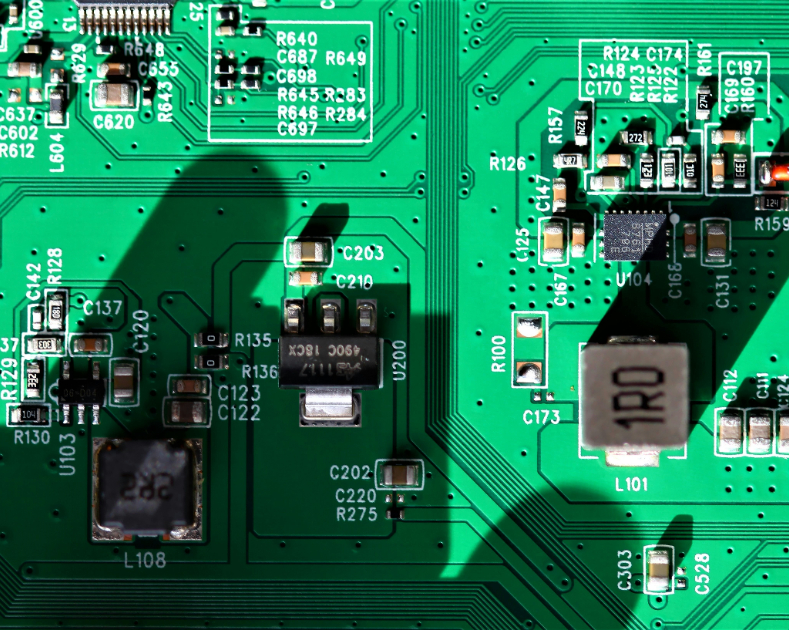
  2. Fine-Pitch ICs & BGAs: What is their minimum pitch capability for Ball Grid Arrays (BGAs) and Quad Flat No-leads (QFNs)? A Tier-1 or advanced Tier-2 manufacturer should comfortably support a minimum BGA pitch of 0.35mm.
  3. Advanced Process Techniques: Do they have experience with Package-on-Package (PoP) stacking, automated underfill dispensing, or rigid-flex PCB assembly?

Automated Quality Control Matrix

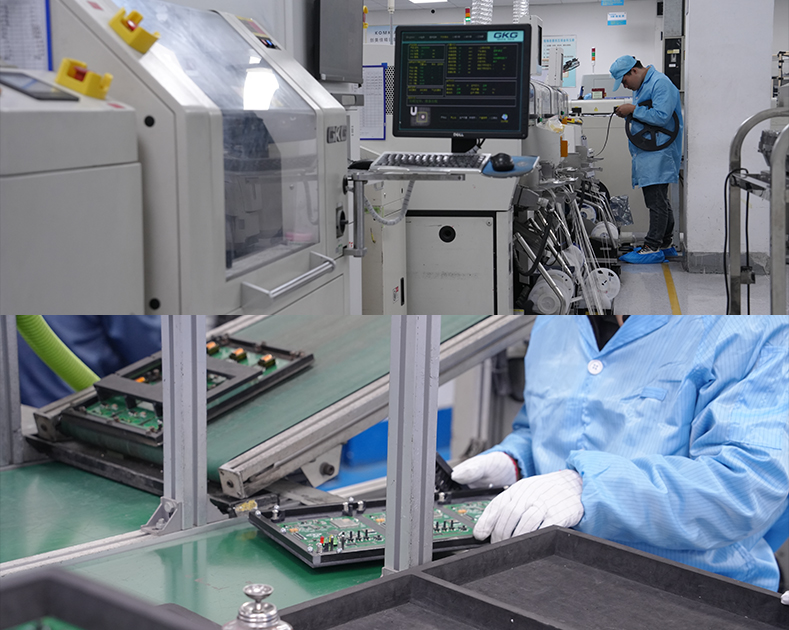
Visual inspection with human eyes is entirely insufficient for modern electronic designs. Ensure your partner deploys a multi-stage automated inspection pipeline:

  1. SPI (Solder Paste Inspection): 3D SPI should be integrated immediately after the screen-printing stage to catch solder volume anomalies before components are placed.

  2. 3D AOI (Automated Optical Inspection): Essential both pre-reflow and post-reflow to verify component orientation, polarity, and joint geometry.

  3. X-Ray Inspection (AXI): Non-negotiable if your design utilizes BGAs, QFNs, or bottom-terminated components where solder joints are hidden from optical view.

Supply Chain & BOM Management: The True Bottleneck

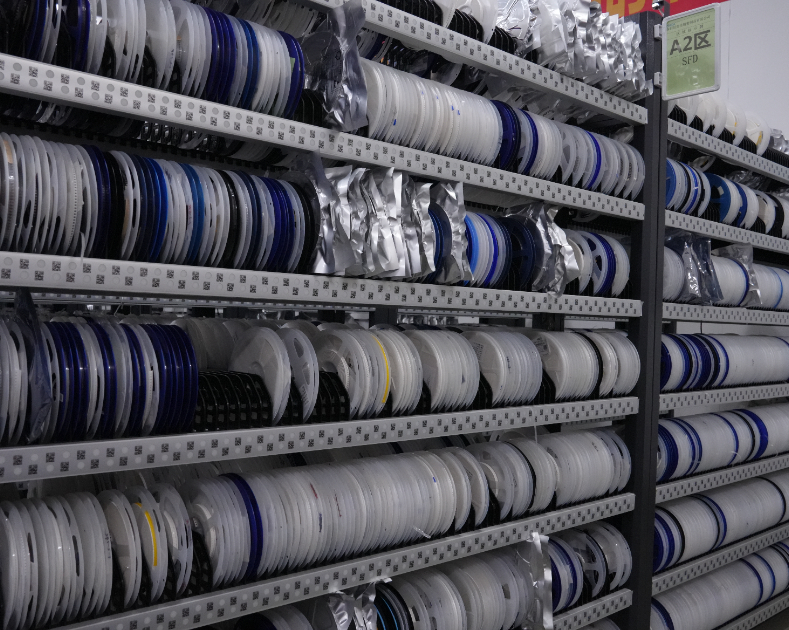
PCBA failures rarely happen during pure machine assembly; they happen during component sourcing. Counterfeit parts, long lead times, and sudden End-of-Life (EOL) components can derail your project entirely.

Sourcing Model Pros Cons Best Used For
Turnkey (Full Sourcing) Low administrative overhead; manufacturer handles logistics and shortages. Premium markup on components; potential risk of unverified substitution. High-velocity prototypes; scalable mass production.
Consigned (Kitted) Direct control over component authenticity and unit pricing. High shipping/customs overhead; if a component is shorted or damaged, production stalls. Ultra-sensitive designs; early-stage R&D with proprietary chips.


Component Traceability & DFM Audits

A high-tier manufacturer should offer robust Design for Manufacturability (DFM) and Design for Testing (DFT) reviews before the first board is run. Their engineering team should proactively flag:

  • Obsolete or high-risk EOL components in your BOM.

  • Drop-in pin-to-pin alternative recommendations from authorized distributors (e.g., DigiKey, Mouser, Arrow) to mitigate supply chain shock.

  • Component footprint mismatches against actual manufacturer datasheets.How to Choose the Right PCB Assembly Manufacturer for Your Project

Case Study Deep-Dive: The Smart Thermostat Challenge

To understand the difference a highly capable PCBA partner makes, let’s break down the manufacturing challenges of an IoT Smart Thermostat:

  1. RF Performance: The board features a Wi-Fi/Bluetooth trace or module. Your manufacturer must understand impedance control, stack-up validation, and the precise placement of surface-mount shielding cans without causing thermal shadows during reflow.

  2. Sensor Protection: To measure environmental temperature and humidity accurately, sensor elements cannot be contaminated. The manufacturer must have automated Conformal Coating systems with tight exclusion zones to protect sensors while sealing the rest of the board against ambient moisture.

  3. Advanced Testing: A good partner doesn't just hand over a board that "passed visual inspection." They design a custom Functional Testing (FCT) fixture to flash your firmware, calibrate the sensors, and test wireless signal strength before packaging.

Engineering to Production: The NPI Transition

A common error is choosing a vendor based solely on cheap rapid-prototyping rates, only to realize they lack the infrastructure to scale. Conversely, selecting a massive Tier-1 contract manufacturer for a 100-unit run will result in poor support.

Look for a partner that excels at NPI (New Product Introduction). The NPI workflow ensures that the lessons learned during the initial engineering prototype run (e.g., tweaking the reflow thermal profile, adjusting stencil thickness for a specific QFN) are documented, saved, and directly applied to the mass production (MP) line.

Hidden Costs and Contract Pitfalls

When analyzing quotes, look past the initial price-per-board. Drill down into the total cost of ownership:

  1. Tooling and NRE (Non-Recurring Engineering) Fees: Understand the upfront costs for SMT stencils, testing fixtures (ICT/FCT), and pick-and-place programming.
  2. Scrap and Yield Allowances: Who bears the financial burden if the first pass yield (FPY) falls below 98%? Ensure your contract explicitly states acceptable yield metrics and rework liabilities.

  3. Intellectual Property (IP) & ECO Management: Ensure the facility has strict data security measures to protect your firmware and layout. Additionally, inquire about their Engineering Change Order (ECO) framework—if you update a schematic mid-way through a product cycle, how does the factory prevent legacy files from being loaded onto the production line?

Summary and Suggestions

Choosing the right PCB assembly manufacturer requires balancing technical capability, supply chain transparency, and rigorous quality control. Rather than shopping solely for the lowest bid, seek an alignment of engineering values. Partners who investment in advanced inspection hardware, practice aggressive DFM auditing, and offer transparent component traceability will ultimately save you thousands of dollars in re-spins, field failures, and delayed product launches.

Companies like Benewave exemplify ideal partnerships with their track record in successful project delivery. Always prioritize a combination of quality, price efficiency, and support to ensure a fruitful project outcome.

FAQ

What is the typical turnaround time for PCB assembly?

Turnaround times can vary significantly depending on complexity, ranging from one week for simple designs to several weeks for multi-layer, high-frequency designs.

How do I ensure the quality of my PCB assembly?

Request detailed information on their quality control processes, product certifications, and consider conducting on-site audits if necessary.

What materials should I specify for my PCB project?

Common materials include FR-4 for standard applications and materials like Rogers for high-frequency use. Specify based on your project’s requirements and operating environment.

Why DFA Checking is Essential for PCB Assembly(PCBA)

2026 PCB Assembly Industry: Driven by AI and Automotive Electronics, Embracing High-End Innovation and Localization

Find Partners, Not Just Suppliers

Expert OEM & PCBA manufacturing tailored to your exact specifications. Contact us today to discuss your project and discover a more collaborative way to manufacture.

Get a Fast Quote & Free DFM Review

*
  • Afghanistan
  • Albania
  • Algeria
  • American Samoa
  • Andorra
  • Angola
  • Anguilla
  • Antarctica
  • Antigua and Barbuda
  • Argentina
  • Armenia
  • Aruba
  • Australia
  • Austria
  • Azerbaijan
  • Bahamas
  • Bahrain
  • Bangladesh
  • Barbados
  • Belarus
  • Belgium
  • Belize
  • Benin
  • Bermuda
  • BBhutan
  • Bolivia
  • Bosnia and Herzegovina
  • Botswana
  • Bouvet Island
  • Brazil
  • British Indian Ocean Territory
  • Brunei Darussalam
  • Bulgaria
  • Burkina Faso
  • Burundi
  • Cambodia
  • Cameroon
  • Canada
  • Cape Verde
  • Cayman Islands
  • Central African Republic
  • Chad
  • Chile
  • China
  • Christmas Island
  • Cocos (Keeling) Islands
  • Colombia
  • Comoros
  • Congo
  • Cook Islands
  • Costa Rica
  • Cote D'Ivoire
  • Croatia
  • Cuba
  • Cyprus
  • Czech Republic
  • Denmark
  • Djibouti
  • Dominica
  • East Timor
  • Ecuador
  • Egypt
  • El Salvador
  • Equatorial Guinea
  • Eritrea
  • Estonia
  • Ethiopia
  • Falkland Islands (Malvinas)
  • Faroe Islands
  • Fiji
  • Finland
  • France, Metropolitan
  • French Guiana
  • French Polynesia
  • Gabon
  • Gambia
  • Georgia
  • Germany
  • Ghana
  • Gibraltar
  • Greece
  • Greenland
  • Grenada
  • Guadeloupe
  • Guam
  • Guatemala
  • Guinea
  • Guinea-Bissau
  • Guyana
  • Haiti
  • Honduras
  • Hong Kong, China
  • Hungary
  • Iceland
  • India
  • Indonesia
  • Iran (Islamic Republic of)
  • Iraq
  • Ireland
  • Israel
  • Italy
  • Jamaica
  • Japan
  • Jordan
  • Kazakhstan
  • Kenya
  • Kiribati
  • North Korea
  • South Korea
  • Kuwait
  • Kyrgyzstan
  • Lao People's Democratic Republic
  • Latvia
  • Lebanon
  • Lesotho
  • Liberia
  • Libyan Arab Jamahiriya
  • Liechtenstein
  • Lithuania
  • Luxembourg
  • Macau
  • Madagascar
  • Malawi
  • Malaysia
  • Maldives
  • Mali
  • Malta
  • Marshall Islands
  • Martinique
  • Mauritania
  • Mauritius
  • Mayotte
  • Mexico
  • Micronesia
  • Moldova
  • Monaco
  • Mongolia
  • Montserrat
  • Morocco
  • Mozambique
  • Myanmar
  • Namibia
  • Nauru
  • Nepal
  • Netherlands
  • New Caledonia
  • New Zealand
  • Nicaragua
  • Niger
  • Nigeria
  • Niue
  • Norfolk Island
  • Northern Mariana Islands
  • Norway
  • Oman
  • Pakistan
  • Palau
  • Panama
  • Papua New Guinea
  • Paraguay
  • Peru
  • Philippines
  • Pitcairn
  • Poland
  • Portugal
  • Puerto Rico
  • Qatar
  • Reunion
  • Romania
  • Russian Federation
  • Rwanda
  • Saint Kitts and Nevis
  • Saint Lucia
  • Saint Vincent and the Grenadines
  • Samoa
  • San Marino
  • Saudi Arabia
  • Senegal
  • Seychelles
  • Sierra Leone
  • Singapore
  • Slovak Republic
  • Slovenia
  • Solomon Islands
  • Somalia
  • South Africa
  • Spain
  • Sri Lanka
  • St. Helena
  • Sudan
  • Suriname
  • Swaziland
  • Sweden
  • Switzerland
  • Syrian Arab Republic
  • Taiwan, China
  • Tajikistan
  • Tanzania
  • Thailand
  • Togo
  • Tokelau
  • Tonga
  • Trinidad and Tobago
  • Tunisia
  • Turkey
  • Turkmenistan
  • Turks and Caicos Islands
  • Tuvalu
  • Uganda
  • Ukraine
  • United Arab Emirates
  • United Kingdom
  • United States
  • Uruguay
  • Uzbekistan
  • Vanuatu
  • Vatican City State (Holy See)
  • Venezuela
  • Viet Nam
  • Virgin Islands (U.S.)
  • Wallis and Futuna Islands
  • Western Sahara
  • Yemen
  • Zambia
  • Zimbabwe
  • Montenegro
  • Serbia
  • Palestine
  • South Sudan
  • Jersey
*

Related PCB Assembly Service