Phone: +86-137 5102 2384
Phone: +86-137 5102 2384
Jun. 19, 2026
Share:
The global PCB assembly market reached an estimated $103.6 billion in 2025, yet pricing remains one of the least transparent aspects of electronics manufacturing. A prototype board can cost $500 per unit while the same design at volume drops to $12. A single layer added to a multilayer stack-up can raise fabrication costs by 25–50%. And for every dollar saved on component unit price, poor sourcing strategy can waste three dollars in delays and rework.
This guide breaks down exactly where your money goes in a PCB assembly project—from bare board fabrication to hidden operational costs—and provides actionable strategies to optimize spending without sacrificing quality.
Before negotiating quotes, understand the typical cost distribution. While exact ratios vary by design complexity, industry benchmarks for a standard mid-complexity assembly look like this:
| Cost Category | Typical Share | Primary Drivers |
|---|---|---|
| Components (BOM) | 60–70% | Unit price, availability, MOQs, alternates |
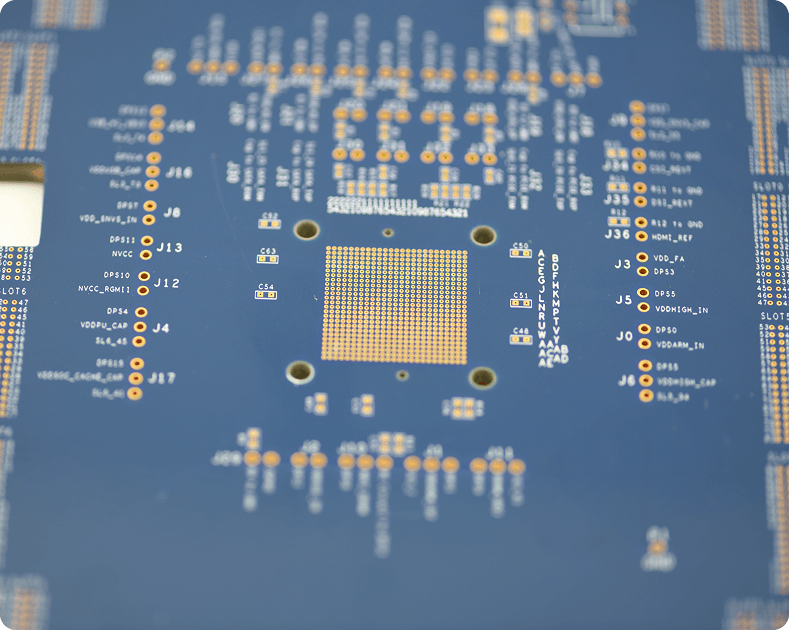
| PCB Fabrication | 10–15% | Layer count, board size, via type, surface finish |
| Assembly Labor & Machine Time | 10–15% | Component count, package types, SMT vs. THT mix |
| Testing & Inspection | 3–5% | Test coverage, fixture NRE, AOI/X-ray requirements |
| NRE (Non-Recurring Engineering) | 2–8%* | Stencils, programming, test development, DFM review |
| Logistics, Packaging, Margin | 5–10% | Shipping mode, ESD packaging, CM margin |
| Hidden Costs (Rework, Delays, Scrap) | 10–25%+ | Design changes, component shortages, compliance failures |
*NRE share decreases dramatically at volume; at prototype quantities, it can represent 20–40% of total project cost.
Key Insight: The BOM dominates your budget, but the hidden cost layer—rework from design flaws, production stoppages from shortages, and qualification delays—often exceeds the visible assembly labor line item. Cost optimization must address both.
Components typically account for 60–70% of total PCBA cost. The primary levers are:
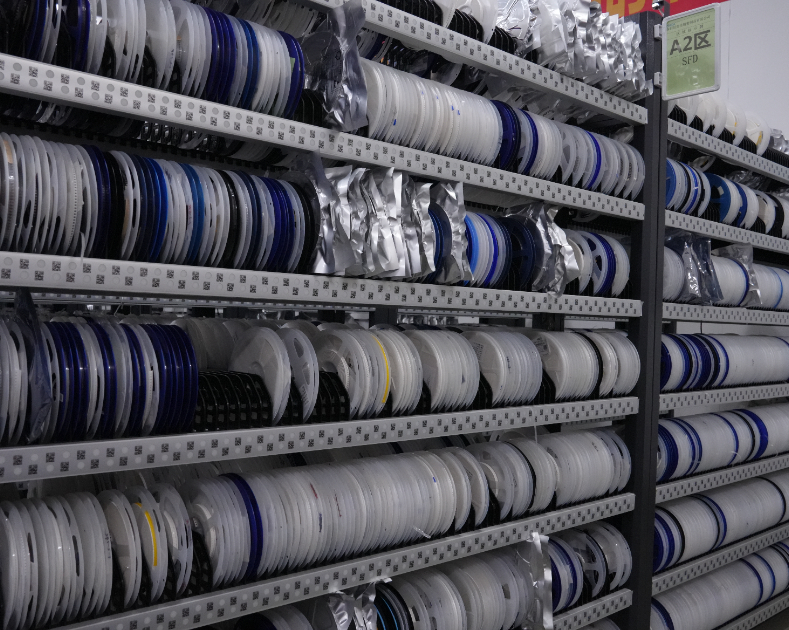
Semiconductor selection: A switch from a branded IC to a pin-compatible alternative can reduce BOM cost by 30–50%, but verify availability and lifecycle status.
Package standardization: Using 0402/0603 passives instead of 0201 reduces placement complexity and attrition rates.
MOQ and price breaks: Component pricing drops at volume thresholds—typically 1,000, 5,000, and 25,000 units. At prototype volumes (1–25 pcs), you pay distributor list price plus markup.
Allocation risk: Hard-to-source parts (automotive-grade MCUs, specific power modules) can trigger expedited freight fees or forced redesigns costing thousands.
Turnkey vs. Consignment Impact: In a turnkey arrangement, your CM sources components and applies a markup (typically 20–50% at low volume, compressing to 5–15% at high volume). While consignment appears cheaper on paper, it introduces hidden costs: shipping delays, overage requirements (factories need 5–10% extra for machine attrition), and administrative overhead. For most projects under 1,000 units, turnkey provides a lower total cost of ownership.
The bare board is not just a substrate—it is a precision-manufactured component. Cost drivers include:
| Fabrication Factor | Cost Impact |
|---|---|
| Layer count | Each additional layer increases cost by 25–50%. A 2-layer board might cost $5/unit; an 8-layer design can exceed $50/unit at the same volume. |
| Board size | Larger boards consume more laminate copper and etching chemistry. |
| Surface finish | Upgrading from lead-free HASL to ENIG can double the base fabrication cost on simple designs. |
| Via technology | Through-hole vias are standard. Blind/buried vias and microvias (HDI) add laser drilling and sequential lamination steps, compounding cost. |
| Material grade | Standard FR-4 is cheapest. High-Tg, low-loss, or aluminum substrates carry 2–5x premiums. |
HDI boards (high-density interconnect) command significant premiums due to laser microvia drilling, copper-filled plating, and sequential lamination cycles—but they enable smaller form factors that may reduce overall system cost.
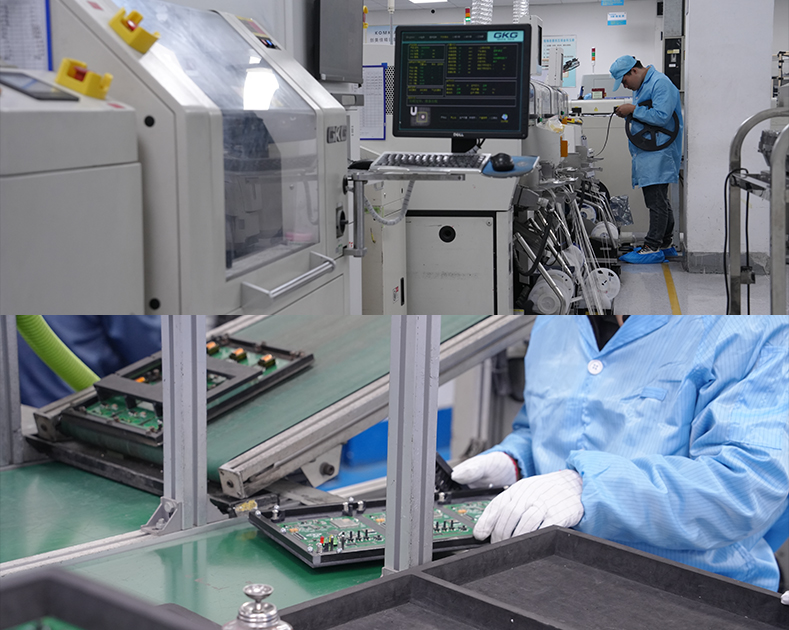
Assembly pricing is driven by two factors: machine time (SMT placement) and human-touch steps (through-hole soldering, rework, odd-form placement).
SMT placement: High-speed pick-and-place machines handle thousands of components per hour. Machine time represents roughly 30% of total assembly cost on typical builds.
Through-hole (THT): Manual or selective soldering is approximately 100x slower than SMT placement per joint. A design heavy in THT connectors or large electrolytic capacitors will see assembly labor costs multiply.
Double-sided assembly: Reflow soldering both sides requires additional process steps and carrier fixtures, adding 15–25% to assembly time.
Fine-pitch / BGA packages: Components below 0.4mm pitch or BGA/QFN packages require slower placement speeds, X-ray inspection, and specialized reflow profiles.
Non-Recurring Engineering costs are fixed per design, regardless of quantity. They include:
| NRE Item | Typical Cost Range |
|---|---|
| Solder stencil fabrication | $100–$500 |
| Pick-and-place programming | $200–$1,000 |
| DFM review & engineering time | $300–$2,000 |
| Test fixture / ICT development | $500–$5,000+ |
| First-article inspection (FAI) | $100–$500 |
The amortization math is brutal: A $1,000 total NRE adds $100 per board at 10 units, but only $0.10 per board at 10,000 units. This is why prototype per-unit pricing is disproportionately high and why consolidating prototype runs into larger batches is the fastest way to reduce unit cost.
Testing is not optional, but it is negotiable in scope:
AOI (Automated Optical Inspection): Standard on most SMT lines; typically included in base assembly pricing.
X-ray inspection: Required for BGA, QFN, and leadless packages; adds $50–$200 per lot depending on sample size.
ICT (In-Circuit Test): Requires custom test fixture NRE ($500–$5,000) but catches manufacturing defects at 99%+ rates.
Functional Test (FCT): Validates board performance in simulated operating conditions; cost scales with test time and fixture complexity.
Rule of thumb: Every dollar invested in upstream inspection (AOI, X-ray) saves $3–$5 in downstream rework and field failure costs.
The most dangerous costs are the ones not on the initial quote:
Rework loops: A design requiring post-assembly jumper wires or component replacement can add 3–5 days and $20–$100 per board.
Component shortage premiums: When a critical part goes on allocation, expedited shipping or last-minute cross-referencing can inflate procurement costs by 50–200%.
Panelization waste: Boards fabricated on standard 18"×24" panels with poor utilization mean you pay for scrap. A design optimized from 60% to 90% panel utilization can cut substrate cost by 30%.
Compliance & documentation: IPC-A-610 Class 3 requirements, traceability records, and CoC documentation add administrative overhead but are essential for medical, aerospace, and automotive applications.
The following tables provide representative 2025–2026 pricing for assembly-only costs (excluding components and bare PCB fabrication), based on U.S. and Asian contract manufacturer benchmarks.
Simple 2-Layer Board (100 SMT components, no THT):
| Volume Tier | Quantity | Assembly Cost per Board |
|---|---|---|
| Prototype | 1–25 | $100–$500+ |
| Low-volume | 10–100 | $50–$150 |
| Mid-volume | 100–1,000 | $20–$80 |
| High-volume | 1,000+ | $10–$40 |
Moderate Complexity 4-6 Layer Board (mixed SMT/THT, 200+ components):
| Volume Tier | Quantity | Assembly Cost per Board |
|---|---|---|
| Prototype | 1–25 | $150–$600+ |
| Low-volume | 10–100 | $80–$200 |
| Mid-volume | 100–1,000 | $30–$100 |
| High-volume | 1,000+ | $15–$60 |
High Complexity 8+ Layer / HDI (fine-pitch BGA, blind vias):
| Volume Tier | Quantity | Assembly Cost per Board |
|---|---|---|
| Prototype | 1–25 | $300–$1,000+ |
| Low-volume | 10–100 | $150–$400 |
| Mid-volume | 100–1,000 | $60–$200 |
| High-volume | 1,000+ | $30–$100 |
Critical Note: These figures exclude components and bare-board fabrication. A complete turnkey assembly including components can range from $50/unit at high volume to $500+/unit for low-volume prototypes, depending on BOM composition.
PCB assembly pricing follows a predictable curve. The most dramatic cost reductions occur at three volume thresholds:
100 units: NRE impact begins to dilute significantly; component price breaks start appearing.
1,000 units: Setup costs become negligible; assembly line efficiency peaks; panelization optimization kicks in.
10,000+ units: Bulk component pricing, dedicated line time, and process stabilization drive costs to their floor.
Example: A board with $1,500 total NRE and $10 variable assembly cost per unit:
At 10 units: $160/board ($150 NRE + $10 assembly)
At 100 units: $25/board ($15 NRE + $10 assembly)
At 1,000 units: $11.50/board ($1.50 NRE + $10 assembly)
This is why forecasting accuracy matters. Ordering 500 units in one batch is almost always cheaper than five orders of 100 units, even if inventory carrying costs are factored in.
Standardize your ACL (Approved Component List): 20% of components should cover 80% of designs. Each unique part number adds procurement risk and setup time.
Minimize THT components: Replace through-hole connectors with SMT equivalents where possible. The assembly speed differential is 100:1.
Optimize panelization: A 2mm dimensional adjustment can shift a design from 8 boards per panel to 12, directly reducing per-board substrate cost by 25–33%.
Design for Test (DFT): Ensure adequate test point coverage during design to avoid expensive custom fixture development later.
Dual-source critical components: For parts with lead times >4 weeks, qualify a second source before production begins.
Leverage CM purchasing power: Turnkey providers buy at volume discounts unavailable to most OEMs. At 1,000+ units, their component markup is often lower than your direct procurement cost.
Monitor allocation markets: Use tools like Octopart, SiliconExpert, or IHS Markit to track inventory and pricing volatility before it impacts your build.
Consolidate builds: Combine multiple low-volume SKUs into a single production run where designs share common components.
Right-size testing: Start with AOI + power-on + firmware load for prototypes. Add ICT and FCT only after design maturity eliminates frequent engineering changes.
Avoid rush charges: Standard lead times (15–25 business days) offer the lowest cost. Expedited 3–5 day turns can increase pricing by 30–100%.
To receive comparable, accurate quotes from multiple CMs, provide:
| Document | Purpose |
|---|---|
| Gerber files (RS-274X) | Bare board fabrication quote |
| BOM with manufacturer part numbers | Component sourcing and alternates identification |
| Centroid / Pick-and-place file | Machine programming and assembly time estimation |
| Assembly drawing | Special instructions, polarity markings, keep-out zones |
| Test requirements document | ICT, FCT, burn-in, environmental screening scope |
| AVL (Approved Vendor List) | Acceptable alternates for long-lead or obsolete parts |
| Quantity forecasts | 6–12 month volume projections for pricing tiers |
Red flags in a quote: Bundled pricing with no line-item breakdown; NRE listed as "TBD"; no stated assumptions about component attrition (typically 5–10% for passives, 1–2% for ICs).
Prototype pricing is high because fixed NRE costs (stencils, programming, first-article inspection) are divided across very few units. A $1,000 setup fee spread over 5 boards adds $200 per unit. At 500 boards, that same fee adds only $2 per unit.
Component selection (BOM) is the largest driver, typically representing 60–70% of total cost. After BOM, board complexity (layer count, via technology, SMT vs. THT ratio) and order volume are the next most significant factors.
Generally, no. While consignment eliminates CM markup, it introduces hidden costs: shipping delays, overage requirements, inventory verification overhead, and liability for counterfeit or damaged parts. Turnkey sourcing is usually more cost-effective for volumes under 5,000 units.
Moving from 10 to 100 units typically reduces per-unit cost by 40–70%. Moving from 100 to 1,000 units yields another 30–50% reduction. The largest drops occur at 100, 1,000, and 10,000-unit thresholds.
NRE (Non-Recurring Engineering) covers one-time costs like stencil fabrication, machine programming, and test fixture design. It ranges from $500 to $5,000+ depending on complexity. Some CMs credit NRE against the first production order or waive it for high-volume commitments.
Yes. Each additional layer increases bare-board fabrication cost by 25–50%. An 8-layer board can cost 5–10x more than a 2-layer board of the same dimensions. However, higher layer counts may reduce overall system cost by eliminating jumpers, connectors, and separate power boards.
Most CMs include visual inspection and AOI as standard. X-ray, ICT, and functional testing are typically add-on services. Always clarify what is included versus optional when comparing quotes.
Use parametric estimation: layer count × board size × estimated component count × production volume. Tools like DFMA software can provide directional cost estimates at the concept stage—when design changes have the highest leverage and lowest implementation cost.
Understanding PCB assembly cost is not about finding the cheapest quote—it is about optimizing the right variables at the right time. The BOM will always dominate your budget, but design decisions made in the first week of a project lock in 70% of your final manufacturing cost. NRE is painful at prototype volumes but irrelevant at scale. And the hidden costs of rework, shortages, and poor panelization can exceed your visible assembly labor line item.
The path forward: Audit your current design against the six cost drivers above. Standardize your component library. Optimize your panelization. Request itemized quotes with NRE separated from unit pricing. And above all, treat cost management as a cross-functional discipline involving design, procurement, and manufacturing from day one.
The companies that master cost transparency today will outbid, out-deliver, and out-profit their competitors tomorrow.
Find Partners, Not Just Suppliers
Expert OEM & PCBA manufacturing tailored to your exact specifications. Contact us today to discuss your project and discover a more collaborative way to manufacture.
Get a Fast Quote & Free DFM Review
Related PCB Assembly Service